
Apartheid laws making a comeback in South Africa



Free Market Foundation CEO David Ansara warned that Apartheid laws are making a comeback in South Africa, which classify and divide citizens by race.
He argued that the Employment Equity Amendment Act (EEAA) is one of the most morally repugnant pieces of legislation.
The EEAA requires all businesses to comply with strict five-year sector numerical targets based on race, sex, and disability.
All employees must complete a form and be classified under one of four racial categories: Black African, Coloured, Indian/Asian, or White.
Employers must accurately reflect these demographic characteristics when submitting their mandatory Employment Equity Report to the Department of Labour.
There is no legal requirement for employees to self-classify by race. The burden of proof, therefore, falls on the employer to decide what racial group their staff belong to.
Failure by an employer to accurately represent their workforce by race, gender, and disability will incur severe liability.
The penalties include fines of up to R1.5 million or 2% of turnover for first-time offenders, or up to R2.7 million or 10% of turnover for repeat offenders.
Furthermore, the Act empowers the Minister to set sector-specific targets by aligning quotas with the “Economically Active Population” data for each economic sector.
Ansara highlighted that over-representation is prohibited, which can significantly impact a business’s hiring practices.
“For every 100 people you hire, you may not have more than four white males or one Indian female among your staff,” he said.
This benefits the majority of demographic groups, including Black African males (43.5%) and Black African females (37.5%).
In some regions and industries, allowed representation for minority racial groups and minority gender categories within those groups will often round to zero.
“This amounts to an effective ban on men or women of a specific race from working in a given sector,” Ansara said.
Apartheid laws making a comeback
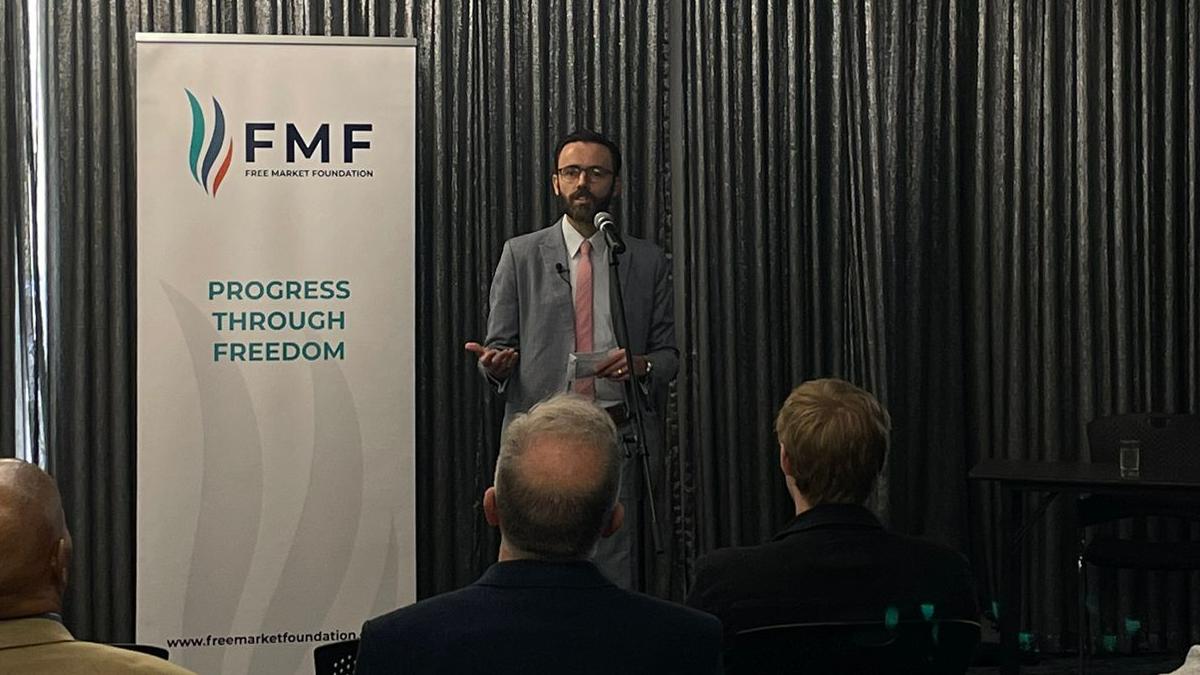
On 4 December 2025, Gerhard Papenfus of the National Employers Association of South Africa (NEASA) sent a letter to the Department of Employment and Labour.
He asked how a business should determine who is a member of which racial group and who decides on the racial categorisation of employees if they refuse to self-classify.
Papenfus specifically sought clarity on Regulation 8(2) of the Employment Equity Amendment Act (EEAA).
This regulation states that employers must use “reliable historic or existing data” when determining the racial status of their employees.
The regulation also notes that disabled people have the right not to declare their disability.
The Department of Employment and Labour replied to NEASA’s letter on 5 December 2025 with a surprising explanation.
It indicated that the regulations refer to “data guided by current and historical legislation which may include the Employment Equity Act 55 of 1998 as amended, Citizens Act 88 of 1995, and the Population Registration Act of 1950.”
“One of the foundational laws of the apartheid system is the guiding framework of the current government’s employment equity agenda,” Ansara said.
He added that the new law forces private businesses to become involuntary agents of the state’s racial programme.
Sakeliga and NEASA object
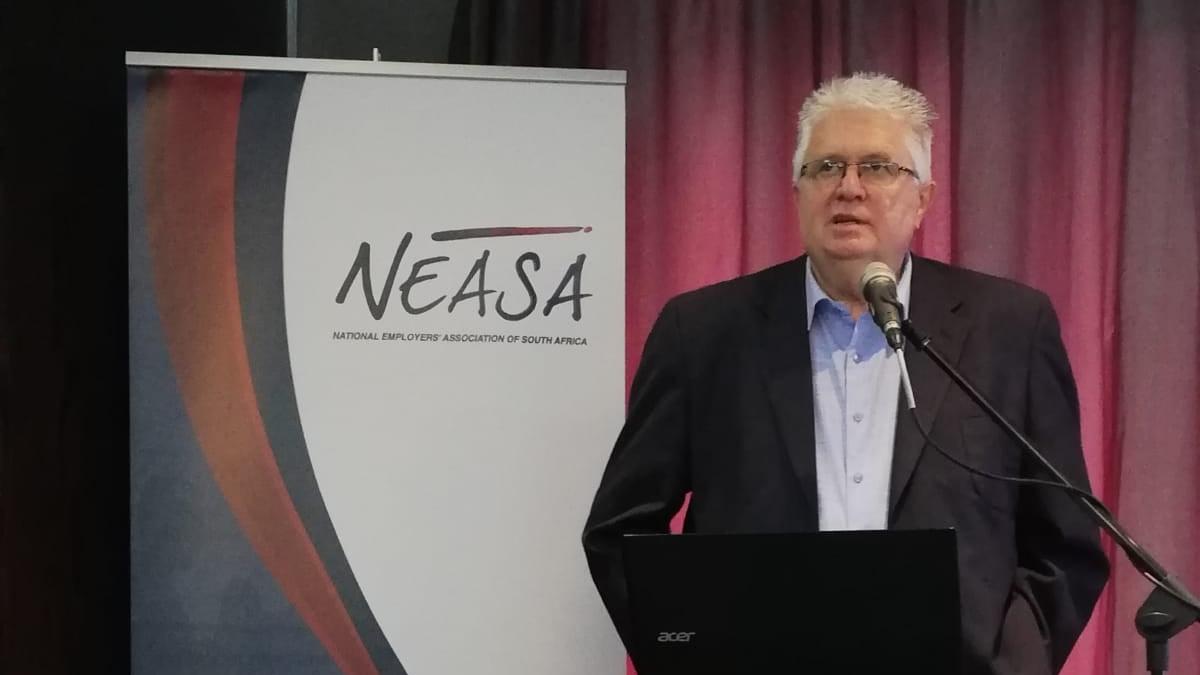
Sakeliga and NEASA have sent a letter of demand to the Minister of Employment and Labour and the Minister of Home Affairs.
This latter demands that the government cease directing employers to apply the repealed Population Registration Act of 1950 for the racial classification of employees.
“The instruction to apply the repealed Population Registration Act is unlawful and reveals the unacceptability of what the Employment Equity Act demands,” they said.
Sakeliga and NEASA highlighted that the Population Registration Act of 1950 was repealed because it was morally unacceptable.
There was also widespread public resistance to the Act, which made it administratively untenable to implement.
The United States Comprehensive Anti-Apartheid Act of 1986 imposed economic sanctions on South Africa.
Repealing the Population Registration Act and abolishing state racial classification were key conditions for lifting those sanctions.
“The Department’s latest instruction that employers should apply the repealed 1950 Population Registration Act creates enormous risks for employers,” they said.
The instruction applies equally to local and international companies operating in South Africa, setting the scene for extensive international scrutiny and pressure.
“International businesses are particularly vulnerable, as they face pressure to carry out the South African government’s race classification of their employees,” they said.
“The South African government must retract the instruction that employers operating in South Africa should use the 1950 Population Registration Act,” they said.
Sakeliga and NEASA stated that employers should not be responsible for the racial classification of their employees.
The Department of Labour responds

The Department of Employment and Labour told BusinessTech that references to the 1950 Act were not instructions to use the Act itself.
It said Sakeliga’s claims were incorrect. “The Population Registration Act has no legal standing, and the Department neither references nor relies on it for any purpose,” it said.
The department said that employers are required to comply solely with the Employment Equity Act, 1998, as amended, together with its published Regulations, Codes of Good Practice, and reporting guidelines.
“The established and accepted method for EE reporting remains employee self-identification, supported by appropriate internal processes,” it said.
“Assertions that the department is ‘resurrecting’ racial classification or exposing employers to legal or reputational risk are without basis.”
Explaining the mention of the 1950 Act in its communication, it said that reference was made to “data guided by historical legislation”, solely because the legal position in this area has been informed by the High Court.
This was specifically the case in the Chinese Association of South Africa and Others v Minister of Labour and Others [2008] ZAGPHC 174 judgement.
In that case, the High Court examined the historical racial classification of Chinese South Africans, including references to the 1950 Act and its 1967 amendment.
Here, the court relied on this historical context to determine that Chinese persons were subjected to apartheid-era discrimination.
They, therefore, fall within the definition of “Black people” for purposes of the Employment Equity Act, despite the 1950 Act already being repealed.
“In taking it into consideration, the department is just following the directive of the court in the cited case,” it said.
The department said its mandate is to “promote equitable representation in the labour market within the framework of South Africa’s democratic legislation and not to revive discriminatory systems abolished more than three decades ago”.




















 Loading ...
What happened to Mandela’s phrase “Never Again ” ?