
Tshwane typhoid outbreak: the result of corruption and poor planning



The typhoid outbreak in Tshwane is a symptom of poor planning and endemic corruption in the water and sanitation system.
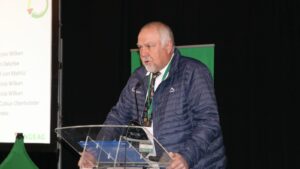
These are the words of the Chairperson of the Portfolio Committee on Water and Sanitation, Leon Basson, who was commenting on a spike in typhoid outbreaks in Hammanskraal and Bronkhorstspuit in Gauteng.
This is the second outbreak of a water-borne disease in Tshwane, and Hammanskraal specifically, in 3 years.
While water is not the only source of the bacterium Salmonella Typhi, “the reality is also that many of South Africa’s wastewater treatment works do not produce quality water as per the South African National Standards,” the Chairperson said.
The portfolio committee said that the current outbreak should be a warning to authorities to repair the water value chain.
The Chairperson lamented that South Africa is a country that has workers with the necessary skills and the necessary resources to make sure water and sanitation systems are maintained, and these incidents are avoided.
Therefore, the only explanation for a typhoid outbreak originating from the water system is poor planning and endemic corruption, Basson said.
The City of Tshwane stated that the source of the outbreak has not yet been confirmed, and that drinking water is regularly tested, with no link to the typhoid cases being found.
“Preliminary results of recent drinking water samples taken and tested have not determined an epidemiological link between these cases,” the City of Tshwane said in a statement on 31 October.
“Furthermore, the results have not yet determined the source of the contamination.”
“Routine water quality tests of drinking water continue to be conducted across the City’s network, and no detection of Salmonella Typhi has been recorded to date.”
The Democratic Alliance’s Tshwane Mayoral candidate, former mayor Cilliers Brink, said that the Hammanskraal community has not had potable water for many years.
“In the past few months, the DA has consistently drawn attention to the stalling of the project to supply Hammanskraal residents with water supplied by Magalies Water and to eliminate the reliance on expensive and exploitative water tankers,” he said.
The second water-borne disease outbreak in 3 years

The first phase of the project to supply the community with water was launched in January 2025, but Brink said when he visited the area a few weeks ago, residents who should have had clean water had none at all.
“Although water is not the only source of typhoid, it is certainly at the top of the list of causes that have to be eliminated,” he said.
Due to the community’s dependence on water tankers, Brink further added that the city should make sure these tankers have maintained hygiene and supply controls.
“The typhoid outbreak confirms the importance and the urgency of infrastructure-based solutions that remove the need for water tankering,” he said.
The party urges the city to release the results of routine water tests to the public to ensure calm.
This is not the first time the Tshwane water system has come under scrutiny after a water-borne disease outbreak. In 2023, during Brink’s tenure as mayor, a cholera outbreak killed 12 people.
An independent investigation into the source of the cholera outbreak involved a large team of microbiologists, epidemiologists, and engineers to assess the functionality and compliance of waste management systems.
However, the results of the investigation were inconclusive. The city said at the time that it remains “unknown whether water was a source of the cholera outbreak.”
Media reports linked the outbreak to the Rooiwal Wastewater Treatment Plant, but then-mayor Brink denied this.
Plans to upgrade the treatment plant were announced in 2019, when a R295-million tender was awarded. Leading up to this point, residents were already largely dependent on water tankers.
The contract was terminated after an SIU investigation, and in 2023, the budget allocated for the upgrade was reduced to R10 million. It has since been readjusted to R253 million, but the project is not yet completed.
The failure of the 2023 investigation worries the parliamentary committee. Basson said that due to these past events, it is critical that investigative work be done urgently to allay fears.
“While we don’t want to pre-empt the investigative work, it remains critical that quality and safe drinking water is always provided to citizens. This is their constitutional right,” he said.




 Loading ...
So much for Tshwane being such a brilliantly run municipality.