
Big changes coming to South Africa’s municipalities



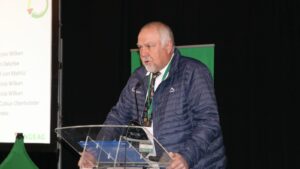
Minister of Cooperative Governance and Traditional Affairs (CoGTA), Velenkosini Hlabisa, said that the current local government system is not working effectively.
In an interview with Newsday, Hlabisa said that as the minister responsible for supporting and supervising local governments, he is busy championing reforms to the local government system.
The Auditor General’s consolidated report for the 2023/2024 financial year paints a bleak picture of the country’s municipal governments.
Of South Africa’s 257 municipalities, only 41 (16%) received a clean audit.
According to Finance Minister Enoch Godongwana, municipalities and municipal entities reported R1.086 trillion in fruitless, wasteful, irregular, and unauthorised expenditure between the 2019/20 and 2023/24 financial years.
This has had a direct impact on services, or lack thereof, delivered to residents.
In President Cyril Ramaphosa’s 2025 State of the Nation Address, he acknowledged that “in many cities and towns across the country, roads are not maintained, water and electricity supply are often disrupted, refuse is not collected, and sewage runs in the streets.”
“Many of these challenges in municipalities arise from the design of our local government system,” he added.
According to CoGTA, between 2010 and May 2025, 168 municipalities (65%) have been placed under national administration for failing to fulfill their obligation to provide basic services.
As such, CoGTA is currently undertaking a review of the White Paper on Local Governance from 1998, which will conclude with restructuring plans by March 2026.
A new funding model

According to the department, the 1998 White Paper was a “product of its time” and was influenced by the struggles for local democracy and a non-racial local government system.
Some of the provisions in the system, such as making local government an equal sphere of government instead of a tier, were a world first.
However, he said that perhaps South Africa was “overoptimistic” at the time the system was designed.
Local government has now regressed due to a variety of administrative, governance, service delivery, infrastructure, financial, and structural challenges.
“These reforms will have far-reaching steps,” he said. The reforms will begin with an analysis of the funding model.
“The current funding model is not functional because it is based on an incorrect premise that municipalities will collect 90% of funding and the government at a national level will only add 10%,” he said.
“There is no 90% the municipalities are able to collect.” He said municipalities become dysfunctional when they lack the funding to do the required work.
The Minister said that reforms to the system will include a new funding model. This will likely depend more on national government funding.
Some municipalities should not exist

The Minister explained, however, that there is no “one-size-fits-all” solution for local governments, because every municipality is different.
“There are some municipalities that are well-to-do. They have a sufficient revenue base. Then there are municipalities that have no revenue base. So a one-size-fits-all in terms of the funding model will not work.”
The reformed system will, therefore, take into account the peculiarities of municipalities and include a thorough study to categorize them accordingly, thereby identifying the right reforms.
Hlabisa added that this study will also identify municipalities that need to be dissolved and will cease to exist in the new system.
“If they are not viable, there is no point in keeping them. Instead, amalgamate them so that they form viable municipalities that would be able to deliver services to people,” he said.
Professionalising local government leadership
The minister further plans to address the competency of local leaders.
He stated that the reforms will implement measures to ensure that mayors, deputy mayors, and executive committee members possess the relevant skills and qualifications for their roles.
“These people are entrusted with huge sums of money. If they are not competent in basic skills, then that is where you will find things are being turned upside down,” he said.
In an additional attempt to improve the competency and professionalisation of local government, Hlabisa said that people must be employed in local government on the basis of being fit for purpose and not political affiliation.
“It must be a skills-based, merit-based employment and swift action must be taken against the politicization of staff, because that is what makes municipalities fail to operate effectively.”




 Loading ...
Just another ANC failure and attempt to use their own failure to grab more power by centralizing it in government