
94% of children in Sub-Saharan Africa cannot tell the time or read simple sentences for meaning


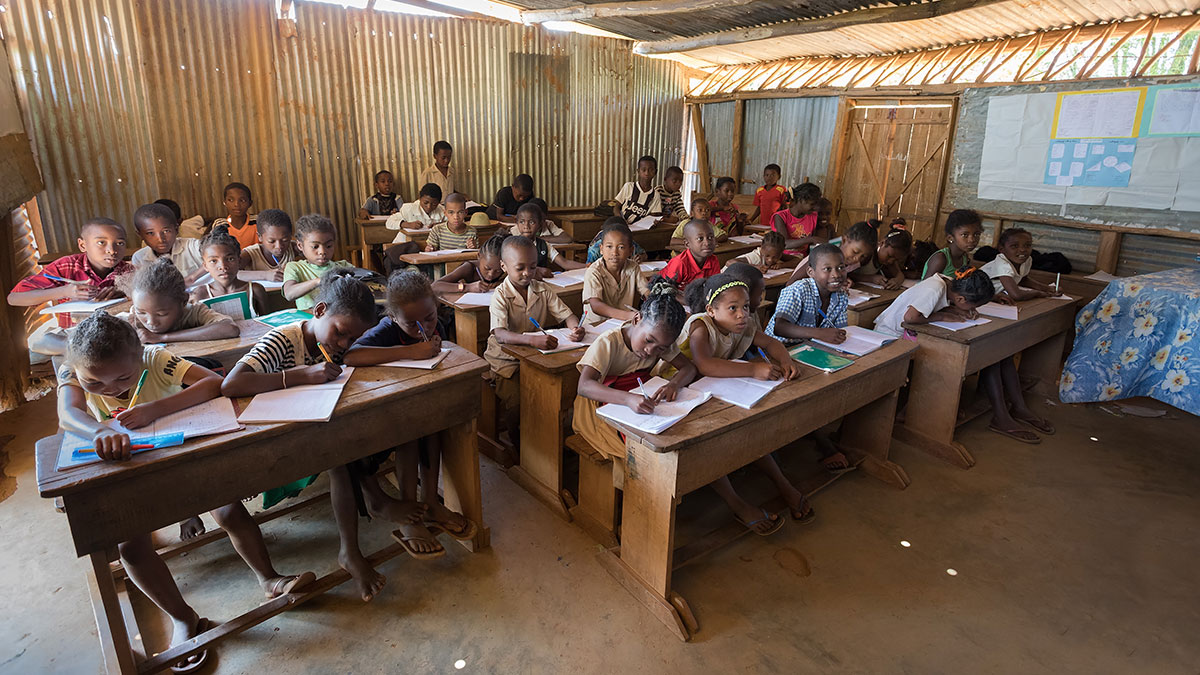
Most children in Africa lack basic skills, such as telling the time using a clock or reading a simple sentence and explaining its meaning.
This was one of the findings of research by Eric Hanushek, Ludger Woessmann, and Sarah Gust, which looked at the goal of universal quality education globally.
Their research, A world unprepared: Missing skills for development, combined multiple data sources from international tests to conduct a cross-country analysis of basic skills using a common achievement scale.
They emphasised that ensuring all children worldwide acquire at least basic skills is crucial for global development.
However, their findings showed that the world is far from meeting the Sustainable Development Goal of universal quality education.
At least two-thirds of the world’s youth do not reach basic skill levels, which hampers economic growth.
The share of children not reaching basic skills exceeds half in 101 countries and rises above 90% in 36 of these countries.
According to the research, Africa stands out as a region where basic skills are in short supply. Skill deficits reach 94% in Sub-Saharan Africa.
South Asia sits at 89%; Middle East & North Africa – 68%; and Latin America – 65%.
While skill gaps are most apparent for the third of global youth who do not attend secondary school, 62% of the world’s secondary-school students also fail to reach basic skills.
“Our results suggest that the world has a long way to go to reach global universal basic skills,” Hanushek, Woessmann, and Gust said.
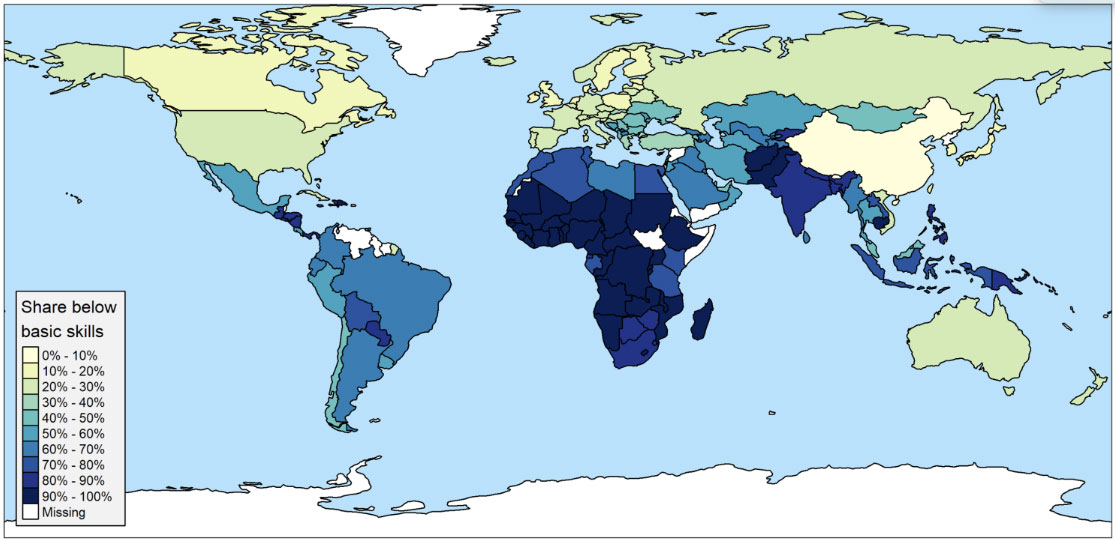
The world map below, based on the research, shows the share of children in different countries who do not reach basic skill levels.
Dark blue countries are the worst affected. Most of these countries are located in Sub-Saharan Africa, indicating a significant shortage of skills in these regions.
Achieving global universal basic skills could add over $700 trillion to world GDP this century — more than five times today’s annual GDP and 11.4% of discounted future GDP, noted the researchers.
This represents the economic loss from failing to meet the goal.
Notably, improving skills of students already in school delivers more than twice the economic gain of simply enrolling children who are currently out of school.
The impact of skills on migration
Demographer and American Enterprise Institute scholar Nicholas Eberstadt noted that the lack of skills has an impact on migration from Africa to Europe.
Many European countries have experienced an influx of migrants from Africa, which has caused problems in many instances.
Eberstadt explained that there are many situations where migration is a win-win, where the country gets valuable skills and the migrants find a better life.
However, there are other situations where migration is not a mutually beneficial outcome. This is the case for many African migrants.
“One of the reasons it is going to be difficult for Europe to attract Africans to an emptying Europe is because of the low level of skills and knowledge,” he said.
He cited Hanushek’s research, which indicates that over 90% of the rising generation in Sub-Saharan Africa lacks basic skills and knowledge.
“They cannot look at a clock and tell the time or read a simple sentence and tell you what it means,” Eberstadt said.
He said you need basic skills to fit into and contribute to a modern society, like those of European countries.
“This is one of the reasons why doubling down on education in Sub-Saharan Africa is an absolute imperative for success of our future,” he said.









 Loading ...
And this is not only for children, MANY adults too!
They READ what they WANT to READ, NOT WHAT IS WRITTEN!
I always say; give school kids a simple muffin recipe – to bake muffins – and 99% they’ll screw it up!
They cannot read to understand!
Here is an “all-in-one” lesson;
a) reading to comprehend
b) math a little (teaspoons = tablespoon)
c) time
d) following precise instructions
e) asking questions