
Rigid race and gender-based quotas against the South African constitution



A significant legal battle is unfolding against the government’s recently published Employment Equity (EE) sectoral numerical targets, which took effect earlier this year.
Major business bodies, including Sakeliga, the National Employers’ Association of South Africa (NEASA), and Business Unity South Africa (BUSA), have initiated legal proceedings.
They argue that the mandatory 5-year targets are “fatally flawed” and unlawful, risking serious harm to individuals and the economy.
Sakeliga contends that the new targets are unconstitutional, arguing that they contradict non-racialism and merit-based appointments, limit freedom of trade, and impose political control over entrepreneurial businesses.
The controversial targets, published by the Minister of Employment and Labour, Nomakhosazana Meth, on 15 April 2025, introduce quotas based on race, gender, and disability across 18 economic sectors for the top four occupational levels.
These quotas require employers with 50 or more employees to restructure their workforce to “better reflect national gender and racial demographics of the country”, or face consequences.
Meth said in a statement that they “are designed to promote equitable representation across all sectors of the economy.”
The department says that there is a “slow pace of workplace transformation” and historical discrimination.
The DEL says the new, sector-specific numerical targets, and strengthens compliance mechanisms like EE compliance certificates “to ensure equitable representation and inclusive workplaces.”
It cites the 2023 Employment Equity Report, which notes that white individuals occupied 62% of top management positions and 50.1% of senior management positions.
They say this is “a disproportionate representation given the population’s relatively small share of the overall population.
Yet, critics like Sakeliga CEO Piet le Roux believe that such requirements “would be disastrous for an already muted South Africa economy,” describing them as unethical, impractical, and discriminatory.
Speaking to Newsday, le Roux said that the system “requires businesses to run their staffing off a government spreadsheet.”
“You can’t do that anywhere in the world and you can’t do that in South Africa.”
The implications of the rules, he warned, are “existential.” “Because they are so bad and so unattainable that we expect most businesses in South Africa not to be able to comply.”
‘Morally objectionable, unethical and impossible to meet’

He contends that the state’s intervention in setting rigid race and gender-based hiring quotas is an unconstitutional infringement on a company’s ability to hire on merit.
Le Roux called the the quotas “morally objectionable, unethical and impossible to meet.”
The Sakeliga CEO highlights that in about a quarter of cases, “white men are limited to a maximum of 4% of positions at top level or at skilled level within the company.”
“This is impossible to meet because the skills distribution in the economy does not exist.” Le Roux added that the rules “go against the grain of what some businesses are.”
In family-run operations, for example, he said that “the male farmer would not be allowed to bring his sons onto the management team because that would violate the quota.”
“He would have to bring in a female, colored or black or Indian person from outside into his company. No, businesses don’t work like that and especially family businesses don’t.”
The regulations apply equally to international companies, which le Roux expects to be a sticking point not only for the US but also for many other countries around the world.”
Legal challenges
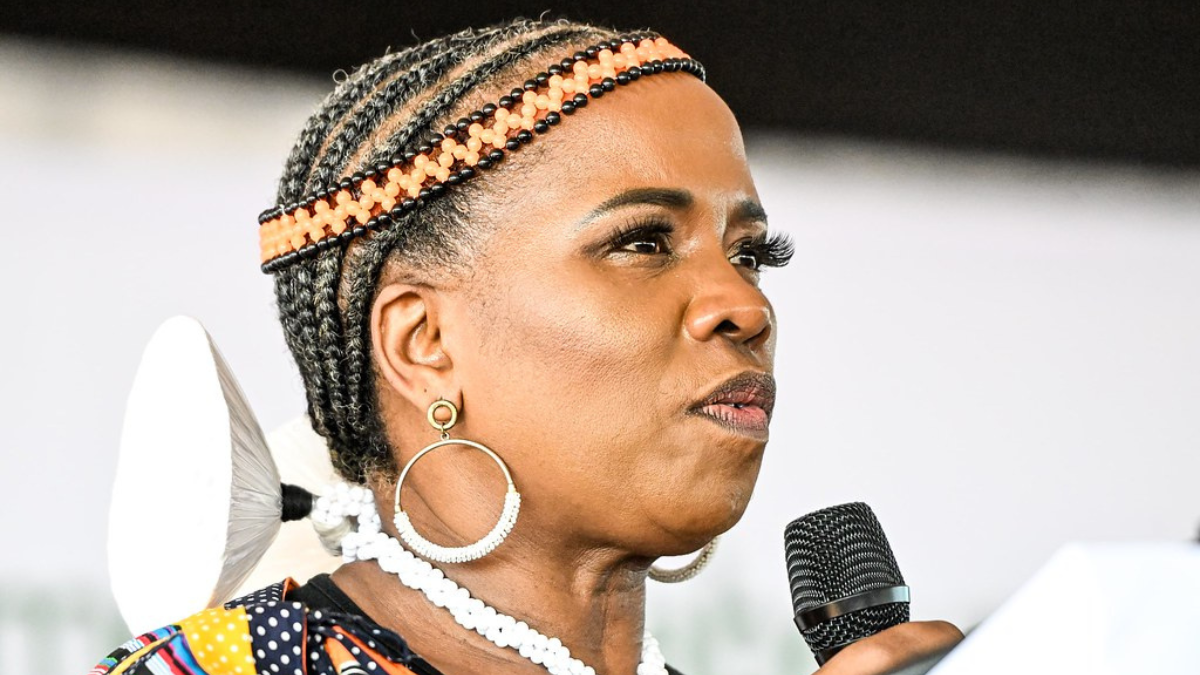
Business organisations are mounting legal challenges to the Employment Equity Amendment Act and its five-year sectoral targets.
Sakeliga, together with the National Employers Association of South Africa (NEASA), has already filed cases after being denied an urgent interdict.
They have lodged an appeal to the constitutional court while pursuing a parallel non-urgent interdict in the high court.
BUSA (Business Unity South Africa) has also joined the fight, with expectations that multiple individual companies will challenge the penalties and fines they are accorded under these regulations.
CEO Khulekani Mathe highlighted alleged procedural irregularities, saying consultations with the Department of Employment and Labor (DEL) amounted to mere “presentations” rather than meaningful engagement.
Employers reportedly had less than a week to comment, in some cases receiving draft targets only the night before meetings.
The Department allegedly failed to explain the methodology, publish draft targets as required, or conduct a proper socio-economic impact study.
On substance, critics argue the targets are unrealistic, applying a one-size-fits-all approach that ignores sectoral and regional differences and fails to align with B-BBEE sector codes.
“Poorly developed targets risk damaging vital sectors of the economy. If targets are unrealistic or not based on the skills available in each sector, companies may find themselves unable to comply,” said Mathe.
Sakeliga and NEASA further contend the targets function as quotas based on race, sex, and disability, raising constitutional concerns about freedom of trade, ministerial overreach, and administrative justice.
The appeal followed the Gauteng High Court’s refusal to grant an urgent interdict against the EE regulations, ruling that the Minister’s powers had already been exercised and that any harm arises from how employers apply the targets.
The court held judicial review was the appropriate remedy, rejected claims of arbitrariness or discrimination, and cited the separation of powers.
“This ruling is a victory for equity, justice, and the rule of law. It affirms that the Department has acted within its legal mandate to advance transformation in the workplace,” Meth said.
“We urge all employers to comply with the Employment Equity Regulations and to prepare for the submission of their 2025 EE reports. The time for meaningful change is now.”
Sakeliga and NEASA, however, argue the court erred by placing responsibility for discrimination on employers rather than the Minister and dismissing constitutional issues.
They criticised its “horse already bolted” reasoning as an “egregious error” and a “dangerous precedent for administrative justice in South Africa.”
Enforcement and outlook

Sakeliga and NEASA have filed applications for leave to appeal to both the Supreme Court of Appeal and the Constitutional Court, with the Minister given 10 days to respond.
BUSA said that that it is not opposing transformation or the Employment Equity Amendment Act but is challenging what it calls substantive and procedural flaws in the way the five-year goals were developed and imposed.
It said that its legal action aims to protect the credibility of equity policy and ensure transformation is implemented lawfully, transparently, and sustainably.
Meanwhile, the DEL continues its national roadshow of 18 workshops to guide stakeholders on implementing the new legislation and sector EE targets.
“Employers are reminded that the reporting period for the 2025 EE submissions opens on 1 September 2025 and closes on 15 January 2026,” said Meth.
“Compliance with the published regulations is not only a legal obligation but a moral imperative,” added the minister.
Le Roux advised businesses to “get good legal advice, figuring out what is possible within your company. Don’t compromise yourself by making promises that you can’t keep.”
The DEL has announced plans to expand inspections, appointing multiple times the labor inspectors that they currently have, creating “a little army of labor inspectors to enforce this,” said the Sakeliga CEO.
“I actually don’t expect this to cause massive closures of business. I expect this to be an additional cost that businesses will still find a way to deal with.”
Despite the risks, he remains cautiously optimistic: “businesses in South Africa have experience with dealing with a harmful government.”
He said that there are mitigation strategies that businesses will likely use, such as splitting into smaller divisions to stay below the threshold.









 Loading ...
Blatant racism, Im so sick of being judged according to the pigment of my skin. Im a south african, not a european. I was born here and so was my forfathers. These are such distructive laws to the south african economy, hence we loose 19 000 jobs every month.