
Parliament blocks millionaire hotspot town’s administration



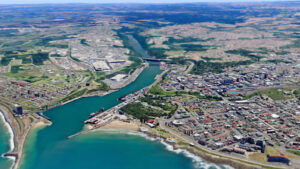
Knysna’s troubled municipality has narrowly avoided dissolution after the National Council of Provinces (NCOP) voted against a bid to place it under administration.
Two weeks ago, Western Cape Local Government MEC Anton Bredell moved to dissolve the council and invoke Section 139(c) of the Constitution, citing severe governance failures and the urgent need to stabilize the municipality.
Residents and local business groups have long raised concerns about the municipality’s declining service delivery, citing raw sewage flowing into streets and waterways, inconsistent electricity supply, and slow responses to infrastructure failures.
According to the provincial government, the proposal aimed to appoint an administrator who could implement recovery strategies unhindered by entrenched political interests, mismanagement, and the council’s ongoing dysfunction.
The African National Congress (ANC) in the province, who control the council through a coalition, claimed that this “had political motives.”
A report tabled by the NCOP on Friday revealed that seven provinces voted in support of keeping the current council, while only two supported dissolution.
The provinces that opposed dissolving the council were Limpopo, Eastern Cape, Mpumalanga, Northern Cape, Free State, Gauteng, and North West. KwaZulu-Natal and the Western Cape voted in favour of the intervention.
Reacting to the decision, Bredell claimed that the NCOP had allowed politics to override evidence of municipal failure.
“The National Council of Provinces, through its members, made the political decision to prevent the Western Cape Provincial Government from saving Knysna from the foreseeable complete breakdown of service delivery.”
“It is unfortunate that this decision was clearly made for political reasons as opposed to having been made based on all the evidence of the Municipality’s dysfunction,” he said.
Bredell said that the NCOP’s ruling effectively left the municipal council in charge of its own recovery, despite a long record of governance failures.
“The decision of the NCOP has effectively put the Municipal Council back in charge of its own recovery and implementing support measures offered by the National and Provincial Government.”
“Council’s track record has shown that it is unable to correct its self-inflicted governance failures, which is causing raw sewage to flow into streets, homes, and nearby waterways and the Knysna estuary, posing severe health and environmental risks.”
The Western Cape government had argued that dissolving the council would have enabled the swift implementation of recovery measures without political interference.
By blocking the provincial intervention, the NCOP has also prevented the Western Cape from accessing additional funding that would have been permitted under a Section 139 Provincial Intervention.
This funding, Bredell argues, could have stabilised immediate operations and laid the groundwork for long-term governance improvements, creating a path toward comprehensive recovery.
Dissolution not needed, says the NCOP

On 23 September, the Select Committee on Cooperative Governance and Public Administration (Traditional Affairs, Human Settlements and Water and Sanitation) resolved to give the administration of the Knysna 14 days to provide a clear plan to address its water and sanitation challenges.
The NCOP Select Committee concluded that, based on evidence provided by councillors from Knysna political parties, unions, external stakeholders, Knysna Municipality had not failed in performing its constitutional duties.
Opponents argue that by placing the council under administration, it would plunge the municipality into more chaos, particularly so close to elections. However, challenges persist.
Chairperson of the committee, Mxolisi Kaunda, said “while we note the general agreement among stakeholders of the improved administrative and governance processes in the municipality, we are concerned that many stakeholders highlighted the issue of broken water pumps.”
Bredell challenged this conclusion, highlighting the gap between the committee’s findings and residents’ lived experiences.
“I’m sure that most residents would disagree with this finding, and I hope that the residents of Knysna will understand that the Provincial Government’s hands have now been tied.”
“No intervention by the Provincial Government will be successful when the political parties making up the Knysna governing coalition, through the NCOP, effectively have a veto right.”
With the NCOP vote, the responsibility for addressing these challenges remains squarely on the existing council, leaving questions about the pace and effectiveness of recovery measures.
As Knysna continues to grapple with governance and service delivery challenges, attention now turns to whether the municipal council can stabilise operations and restore confidence among residents without the provincial intervention that had been proposed.
Knysna is governed by a fragile coalition between the ANC, Patriotic Alliance, Plaaslike Besorgde Inwoners, and the Economic Freedom Fighters (EFF).
ANC provincial spokesperson Khalid Sayed welcomed the outcome, saying that “the ANC-led coalition has shown progress in appointing senior managers and improving audit outcomes.”
“The DA has noticed that the Knysna community can see the progress being made and was simply playing politics.”






 Loading ...
Went to school in Knysna. What a pleasure it was years ago. Visited it lately a few times and it has really became a dump under the ANC. Sorry I rather take my holidays now closely to Cape Town.