
Millionaire hotspot at risk of being placed under administration given new deadline



Parliament has given the Knysna Local Municipality in the Garden Route in the Western Cape 14 days to present a clear plan to address its water and sanitation challenges.
The Parliamentary committee on Cooperative Governance and Public Administration visited the municipality following a notice from the Western Cape Government to invoke section 139 of the Constitution on 18 September.
This allows the government to dissolve the council and authorises the provincial executive to manage the municipality, a process implemented when a municipality has been deemed incapable of delivering basic services.
If implemented, Knysna could be placed under administration, triggering elections in all 11 municipal wards within 90 days.
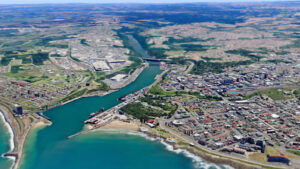
The Garden Route town, known for its lagoon, forests, and the Knysna Heads, has long struggled with governance and service delivery issues affecting its 100,000 residents.
Reports since 2018 have detailed repeated sewage spills, chronic water shortages, and erratic refuse removal, all of which have harmed residents, businesses, and the environment.
Recently, residents told Newsday they were without running water for weeks due to pump failures. Water had to be supplied by NGOs like Gift of the Givers.
Community members began filling the service delivery gap themselves, at personal cost, bringing some meaningful improvements, through partnerships with the municipality.
Still, the provincial government has grown frustrated at the burden placed on residents.
MEC Bredell cited repeated sewage spills, prolonged water shortages, and inconsistent refuse removal as critical factors driving the decision.
Western Cape Premier Alan Winde described the intervention as “an act of last resort,” to stabilise the municipality and implement recovery plans “unhindered by entrenched political interests, mismanagement, or lack of oversight.”
The committee, after presentations from the Western Cape Government and stakeholders, is expected to decide on municipal administration on 26 September.
Parliamentary committee chairperson, Mxolisi Kaunda, said that the committee agreed with the ANC and others who said that there have been governance and administrative improvements in the municipality.
However, Kaunda added, “we are concerned that many stakeholders highlighted the issue of broken water pumps. The provision of quality water and sanitation is critical to the socio-economic well-being of residents.”
Water and sanitation infrastructure is particularly important to the tourism industry: the “lifeblood of economic activity” in Knysna, the parliament committee said.
Non-functioning water pumps were a central factor in the Western Cape Government’s presentation advocating for dissolving the municipal council.
Some are concerned that the dissolution of the municipality will not address its longstanding problems, such as ageing infrastructure.
“Others expressed their concerns about perceived political undertones in the decision to intervene, suggesting that the intention was not to primarily resolve the municipality’s problems,” the committee said.
Political parties, unions, community groups debate the dissolution

Following the dissolution announcement, ANC Western Cape spokesperson Khalid Sayed told Newsday that they believe “it is a premeditated, politically motivated attack aimed at plunging an improving municipality into instability,” he said.
Western Cape Local Government MEC Anton Bredell faced heavy criticism of this nature from the Knysna Mayor Thando Matika and the ANC-led coalition council during his presentation, according to the Knysna-Plett Herald.
The majority of those at the meeting were opposed to the dissolution. This included the ANC, the Knysna Independent Movement, the Patriotic Alliance (PA), Plaaslike Besorgde Ingewoners (PBI), and the EFF.
The Independent Municipal and Allied Trade Union (IMATU), the South African Municipal Workers Union (SAMWU), the Greater Knysna Business Council, Knysna Infrastructure Group, Changes of Knysna, the Yona Yetu Initiative, the Landless Committee, and Afriforum additionally opposed the dissolution.
They were joined by the Knysna Infrastructure Group, the Garden Route Ratepayers’ Alliance, Sanco, Salga the Khoisan Community, and the Knysna Taxi Association.
The only stakeholders supporting the dissolution were the DA, Knysna Unite, and the Active United Front.
The Accountability Group (TAG), a public interest organisation that has previously called for Knysna to be placed under administration, called the meeting a “hatchet job.”
“So sad that the province that supported TAG’s call for administration got savagely attacked by most of the speakers, including Afriforum, SALGA, and various organisations we have never heard of,” the group said.




 Loading ...
My family and I have been visiting Knysna for holidays over the Christmas period several times in the past. It is sad to read this.
Here again, proof that where the ANC and its cronies run the show, deterioration accompanies them.