
74% of South Africa’s water services are in poor condition and need R400 billion to fix


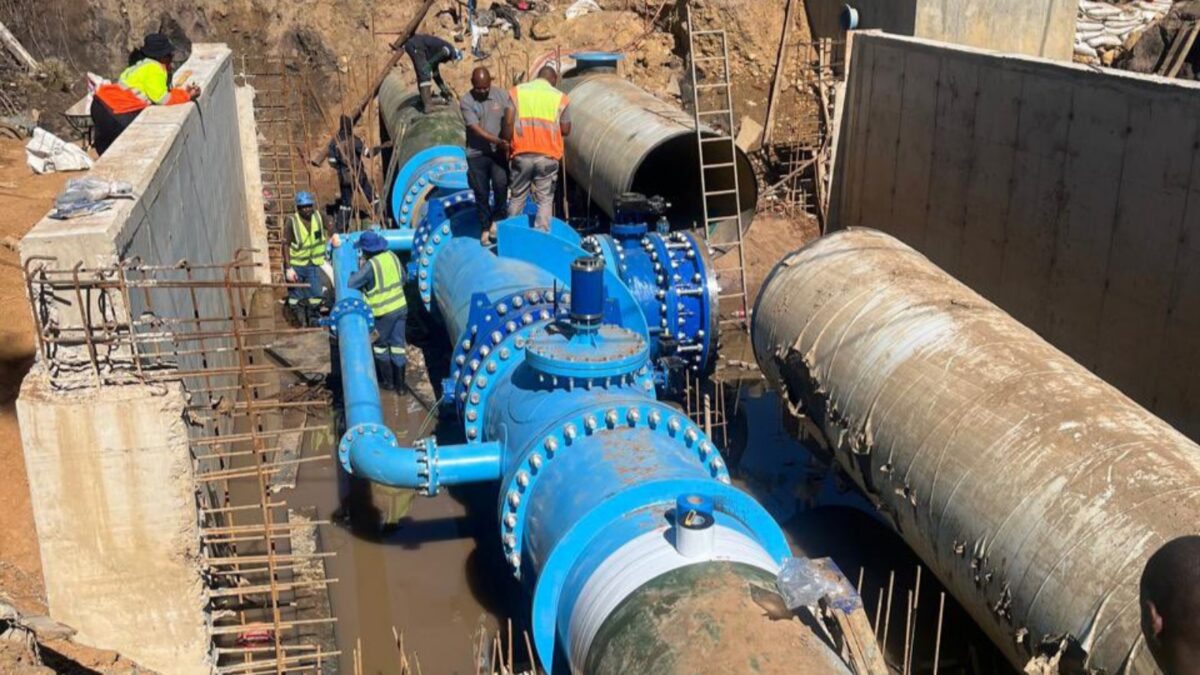
107 of South Africa’s 144 Water Service Authorities are in poor or critical condition, accounting for around 74% of the country’s municipal water services.
The total infrastructure requirement needed to restore these authorities to an acceptable condition has been estimated at R400 billion, far above the budget allocated to fix them.
This was revealed by the Minister of Water and Sanitation, Pemmy Majodina, in a response to a Parliamentary question from National Assembly Member Siyabonga Mkhize.
Mkhize had asked the Minister to disclose the number of municipalities experiencing recurring water-supply failures, including which ones needed direct national intervention.
He also asked the Minister to detail how much had been allocated to repair ageing water infrastructure in each municipality, and the dates by which water would be restored to these areas.
Mkhize asked these questions in relation to the National Water Action Plan (NWAP), which was introduced by President Cyril Ramaphosa on 23 July 2026 to tackle the country’s water crisis.
In her response, Majodina said the NWAP had used existing data from the Department of Water and Sanitation’s (DWS) 2025 Blue Drop, Green Drop, and No Drop reports.
“The Drop reports released in 2026 found that 107 of 144 Water Service Authorities (WSA) were in either a poor or critical state in one or more key water service performance areas,” Majodina said.
Majodina revealed that through the NWAP, direct interventions under Section 63 of the Water Services Act had been implemented across three municipalities.
These include the Emfuleni Local Municipality in Gauteng, as well as the uMkhanyakude and uThukela District Municipalities in KwaZulu-Natal.
In addition, NWAP-aligned support interventions had been implemented at the Maluti-a-Phofung and Matjhabeng Local Municipalities in the Free State.
These aimed at stabilising water systems and restoring the functionality of bulk water supply infrastructure to improve operational performance.
Despite the interventions of the NWAP, Majodina revealed that the plan does not provide for direct funding allocations to specific municipalities.
“No additional funding has been made available for the NWAP to implement direct interventions,” Majodina explained.
“In terms of existing allocations for water services infrastructure, DWS estimates the total infrastructure requirement across the 107 Water Service Authorities to approximately R400 billion.”
Majodina said this was the infrastructure requirement and not the actual allocated budget, with R65 billion being transferred to municipalities from the DWS over the past five years.
This includes R13.7 billion in infrastructure grant allocations given to municipalities during the current financial year, with 80% of this being allocated to the 107 worst-performing WSAs.
According to Majodina, the DWS was unable to specify a date by which a reliable water supply would be restored to all affected communities.

 Loading ...
Maintenance, timely planning repairs when needed that is foreign concepts to these municipalities. Yet when the costs if the replacements yes replacements that is how it has degraded then these incompetent cadres have precise figures to hand out if what the costs will be. How wonderfully deceptive . They deliberatly ruin things so they can loot and f#$& the taxpayers,again.
It is not the colour of the skin that causes racial relations to breakdown it is this uselessnes and waste that does cause the harm . If it was green people or white doing this the reactions would be the same.