
The EFF was created to push the ANC to the left


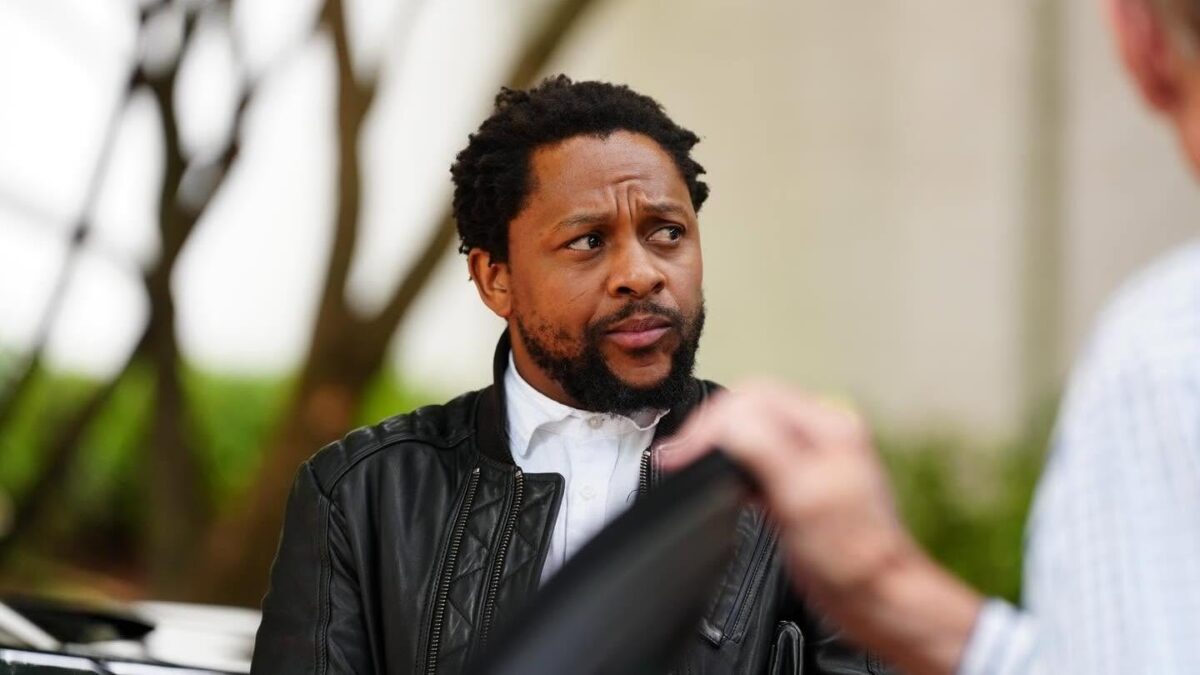
Former EFF member of Parliament, Mbuyiseni Ndlozi, said that the EFF was started as a balancing force to prevent the ANC from shifting too far to the right.
Ndlozi shared his views about the creation of the Economic Freedom Fighters (EFF) during a discussion on the Sizwe Mpofu-Walsh Xperience (SMWX) podcast.
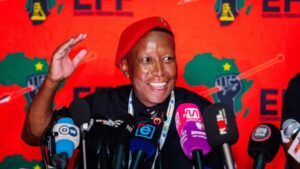
The EFF is a communist and black nationalist political party founded in 2013 by former African National Congress Youth League (ANCYL) president Julius Malema.
It describes itself as a radical, Marxist, Leninist, and Fanonian movement born out of the need to confront the unfinished struggle for true liberation in South Africa.
“The EFF represents the aspirations of the poor, the working class, and the dispossessed,” it states on its website.
At the party’s launch, Malema was flanked by Floyd Shivambu, Mbuyiseni Ndlozi, Andile Mngxitama, and Sam Tshabalala.
This makes Ndlozi an expert commentator on the party and why they decided to start it 13 years ago.
He said that the EFF project, of which he was a part, predicted a day where the ANC would lose significant support in South Africa.
“If you read it faithfully and with the necessary intellectual honesty, the core of the EFF was to analyse the self-destructive nature of the ANC and SACP,” he said.
“It predicted that a time would come when their electoral support would fall so low that their only remaining option for the ANC would be to move to the right.”
“We therefore created a left-wing entity so that when that day arrived, we could keep the ANC to the left.”
He said that the EFF was founded to serve as an antithesis to the destruction occurring within the heritage of the liberation movement.
It aimed to remain faithful to the ideals of the 1955 Freedom Charter and the Constitution.
“That day eventually came because that initial analysis was honest. It stemmed from the realisation that there was no capacity for self-correction in the ANC,” he said.
African unity is needed for white and Indian security
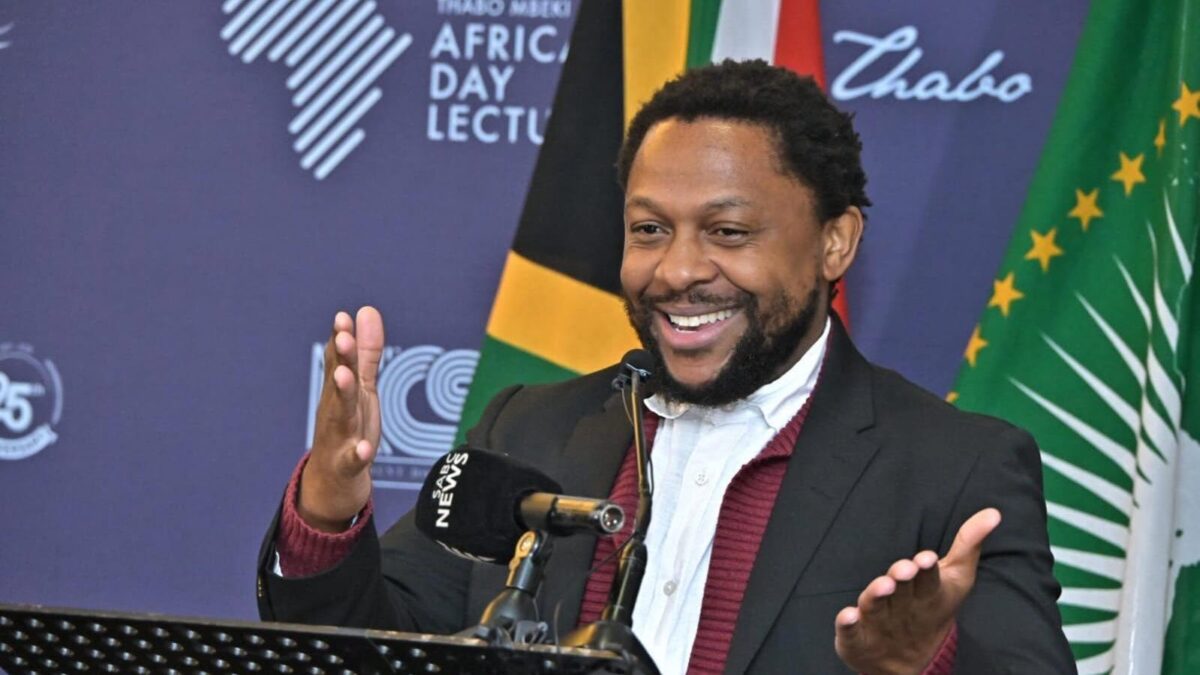
Ndlozi argued that minority groups, including white and Indian South Africans, need African unity to create a secure country.
“If the African house is not in order, the entire South African state and economy will crumble, regardless of who holds municipal or national office,” he said.
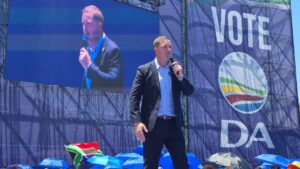
He cited the hypothetical case of Helen Zille and the Democratic Alliance winning the local government election in November 2026.
“She is not going to win. However, let’s assume 70% of the African population in Soweto, Alexandra, Orange Farm, and Diepsloot don’t vote,” he explained.
That will lead to the Democratic Alliance gaining over 50% of the vote, creating the impression that the DA is getting 50%.
“That is simply the mathematics of differential voter turnout. Naturally, that reproduces minority governance,” he said.
He described this scenario as a minority regime reproduced through the mechanisms of democracy itself.
“Even if she achieves that, she won’t be able to make a meaningful difference. She won’t be able to turn things around because you need African unity,” he said.
He argued that for South Africa to function, whites, Indians, coloureds, and all other groups need African unity.
“If the African house is not in order, the country cannot stand. That is how fundamental it is. This is Africa, and you cannot govern it while keeping Africans divided,” he said.
You have read 1 out of 5 free articles. Log in or register for unlimited access.


 Loading ...
Julius Malema was permanently expelled from the ANC on April 24, 2012, and he officially founded the Economic Freedom Fighters (EFF) on July 26, 2013. From ANC Expulsion to Marikana. The “Out of Politics” Period: After losing his final appeal against his expulsion in April 2012, Malema was technically a political outcast without an official party platform. He was also facing severe financial pressure and a South African Revenue Service (SARS) tax bill. The Marikana Incident: On August 16, 2012, the tragic Marikana massacre occurred. Just days later, Malema seized the moment. He went to Marikana, addressed the grieving and angry miners, sharply condemned the ANC government, and specifically targeted Cyril Ramaphosa (who was then a non-executive director at Lonmin mine). This pivotal moment effectively launched his political comeback and laid the ideological groundwork for a new, radical anti-government movement. Funding by Adriano Mazzotti (Carnilinx) The Funders: In 2014, Adriano Mazzotti, a director of the cigarette manufacturing company Carnilinx (often mistakenly referred to as Carling), paid the R200,000 electoral registration fee required for the EFF to contest its first general election. The Smuggling Ties: Mazzotti is a self-confessed cigarette smuggler who signed an affidavit admitting to complicity in smuggling, fraud, and tax evasion. He has long-standing ties to Malema, even helping him pay off his personal SARS debts and providing a home for Malema’s family in Johannesburg.3. The SARS “Rogue Unit” Narrative & Sunday Times The Backstory: The Sunday Times published a series of articles claiming a “Rogue Unit” existed within SARS that ran brothels, spied on politicians, and protected tax-evaders. This narrative led to the purging of highly capable, honest top officials at SARS. The Retraction: It was later proven in court and through various investigations that the “Rogue Unit” narrative was entirely false. The Sunday Times formally apologized and retracted the stories, admitting they had been misled by state intelligence factions. Malema’s Stance: Malema and the EFF heavily pushed the “Rogue Unit” narrative to attack their political opponents, particularly Pravin Gordhan. Even after the narrative was debunked and public apologies were made, Malema and the EFF doubled down on the allegations rather than apologizing to the cleared officials.4. EFF’s Political Footprint You noted that the EFF is a small communist party with roughly 10% support. Statistically, this is very accurate: While they call themselves a “radical, leftist, anti-capitalist movement”, their electoral performance has consistently hovered around your estimation. They achieved 6.35% in 2014, 10.8% in 2019, and dropped slightly to 9.52% in the 2024 national elections. Though they hold significant disruptive power in Parliament, they remain a minority party behind the ANC and the DA. When was kicked out of the ANC