
Business owners in South Africa arrested, put in holding cells, and pressured into paying R30,000 fines



The Department of Home Affairs, under Minister Leon Schreiber, has launched a heavy-handed offensive against businesses suspected of employing undocumented workers.
Newsday has received reports about the crackdown on businesses, which paint a scary picture of the tactics used by Home Affairs.
The reports are similar, with Home Affairs officials flanked by officers from the South African Police Service (SAPS), arriving at a business unannounced.
The Home Affairs officials then accuse the business owner of employing undocumented foreign workers, requiring documentation about these workers.
One business owner reported that they presented all the required paperwork to the Home Affairs official, noting that the Department of Labour had approved it.
However, the Home Affairs official said that it was fake, and that they were guilty of employing undocumented foreign nationals.
The business owners were then arrested and taken to holding cells. According to their feedback, they were pressured into paying a R30,000 admission-of-guilt fine.
What was striking across all the reports was that the business owners were unaware of employing any illegal foreigners, as all their workers had documentation.
Despite doing what they thought was necessary under the law, the owners were told they were non-compliant and arrested.
They added that the experience was traumatic and that it made them rethink running businesses in South Africa.
They also questioned why the Home Affairs officials were so aggressive and would not listen to their side of the story.
The business owners asked why Home Affairs, under a DA Minister, did not adopt a friendlier approach to help businesses with compliance.
Instead, they said the approach was heavy-handed and felt like an attack on their businesses rather than a compliance drive.
Schreiber defended his officials’ actions, saying they are intended to restore the rule of law in South Africa.
“The Department is working in coordination with other law enforcement agencies to restore the rule of law in South Africa’s immigration system,” he said.
The Home Affairs Minister added that their actions include the verification of visas and permits as required.
“Where the law is violated, the relevant legal sanctions are enforced without fear or favour,” Schreiber said.
Raid on a quiet Cape Town residential estate
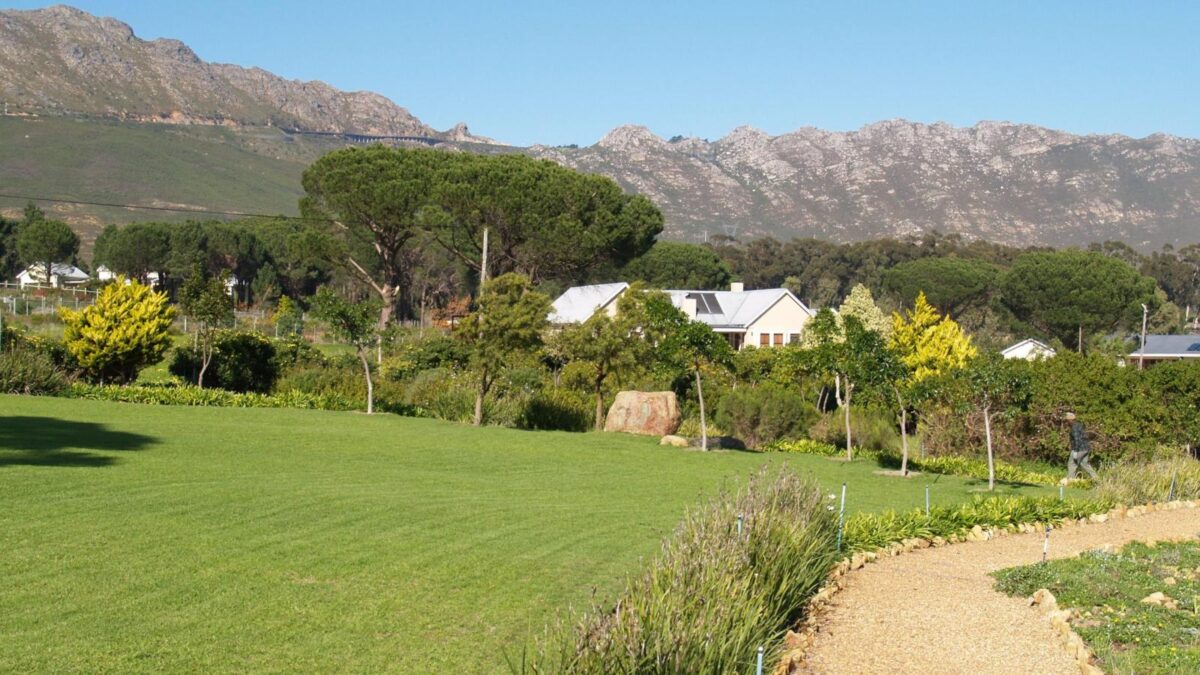
These reports are not isolated to businesses. The High Riding Country Estate on the foothills of the Helderberg Mountains in Sir Lowry’s Pass reported a similar incident.
On 23 July 2026, the peace at High Riding Country Estate was disturbed after six police vans, accompanied by Home Affairs officials, arrived at the gates.
Eva Crouwel, a property owner at High Riding Country Estate, said the police gained access to the estate by intimidating the two security guards at the gate.
She said that the police and Home Affairs officials visited numerous homes in the estate, knocking on doors and sounding their horns.
After approximately 20 minutes, several residents and estate security escorted the authorities off the premises.
Crouwel said that when they confronted the police about the lack of a warrant, they were told that immigration laws do not require a warrant.
“At no stage was a warrant presented. There was further follow-up by our Homeowners Association, which established that the warrant wasn’t actually presented,” she said.
“They are still also investigating the matter in terms of the legalities around SAPS actually entering the estate like this.”
The Homeowners Association is seeking legal advice to challenge the incident with SAPS and to escalate the matter to the Western Cape Premier.
“I am not going to leave it here. One of the reasons I decided to go public with this story is because it is vital that we draw a line somewhere,” she said.
“When private residences are entered by police authorities, it is important that there is a level of responsibility, accountability, and legality behind how it is done,” she said.
“Having safety and sanctuary in our own homes is a fundamental right for human beings, residents, and citizens of South Africa.”
“If we allow the South African Police Service to enter premises without due cause or a warrant, we are heading down a very slippery slope.”










 Loading ...
The principal offender is the government itself who allowed undocumented foreigners into the country.