
Fight against race laws in South Africa



Sakeliga and NEASA (National Employers’ Association of South Africa) urge CEOs to protect operational autonomy by hiring strictly on merit, not according to race.
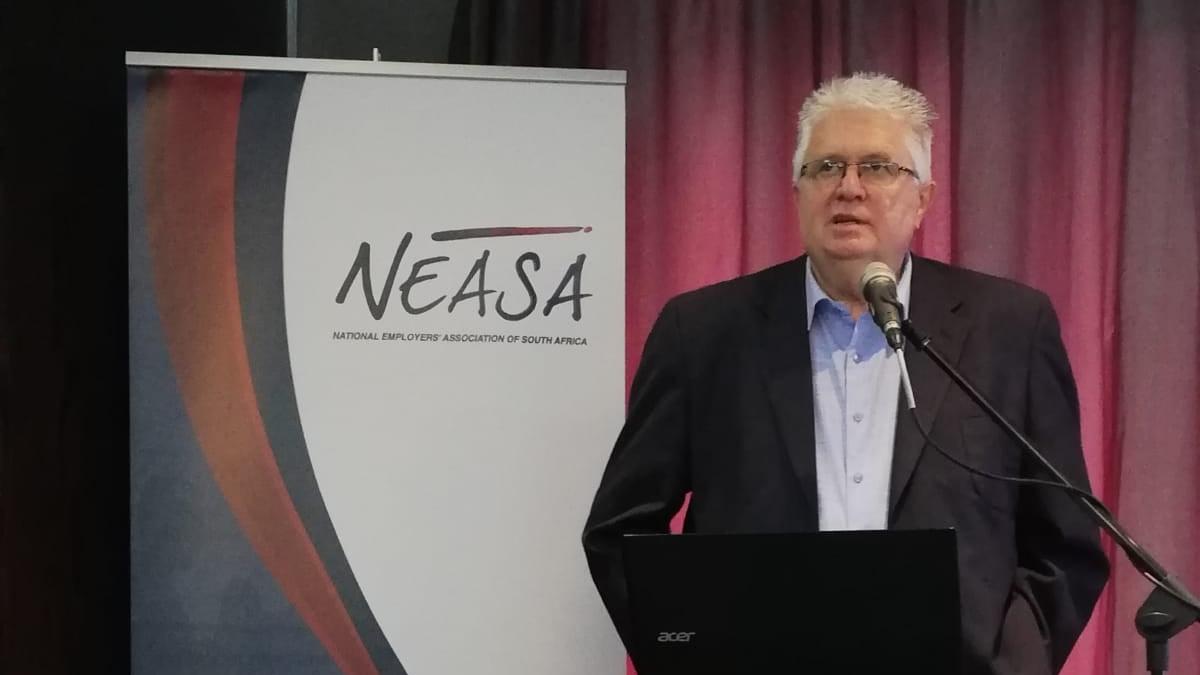
This was argued by Sakeliga CEO Piet le Roux and NEASA CEO Gerhard Papenfus in a discussion on Kragdag.
The Employment Equity Amendment Act (EEAA), which Sakeliga and NEASA oppose, empowers the Minister of Employment and Labour to set mandatory hiring targets.
These targets are binding five-year demographic numerical targets across 18 economic sectors, which dictate workforce race proportions across top management and lower levels.
Under the act, there are hiring quotas for designated people groups – Black, Coloured, Indian, women, and people with disabilities.
The regulations require employers to classify their staff into these categories, specifically by race, which is the practice that Sakeliga and NEASA condemn in this interview.
Penalties for non-compliance include massive fines of up to 10% of a company’s total annual turnover for repeated non-compliance.
Do not comply

Le Roux and Papenfus argue that state-mandated race-based hiring quotas are unconstitutional, absurd, and destructive to business in South Africa.
“We do not want to cooperate with the wishes of politicians who think they can organise society based on tables and spreadsheets with quotas,” said le Roux.
He urged South African businesses not to blindly comply.
“We are dealing with something that is so absurd that, for the first time, we are safe in the number of people who are not going to comply.”
“You are not going to be the exception if you do not comply, because the requirement is an impossibility.”
Papenfus agreed, saying that businesses must appoint staff on merit, and those that strive for the state’s target will ultimately fail.
“I appoint on merit. And for that principle, you as a business must fight… I will always appoint people on merit, I cannot deviate one inch from that,” said Papenfus.
He also pleaded with businesses to strategically comply by handing in their 5-year Employment Equity plans, rather than facing non-compliance penalties.
Advice to employers
Le Roux and Papenfus offered strategic advice to businesses, explaining how to push back while strategically complying.
1. Do not delegate compliance
Papenfus warned that employment equity compliance must not be handed off to HR – it is the responsibility of the CEO and the board.
“You never delegate. The MD or the chief executive – they decide what the company looks like, and are intensely involved in this process from day one,” said Papenfus.
“If you delegate this to HR, they will comply, and your business will no longer exist in a couple of years,” he said.
2. Reject maximum compliance
Le Roux also argued that businesses must reject maximum compliance or blindly following the rules to meet arbitrary state quotas, and rather focus on minimising risk.
“Firms [face] a strategic decision of either following a ‘maximum compliance’ path, or seeking to minimise risk exposures through a more considered approach,” said Le Roux.
“Meeting numerical targets would, in most instances, prove impossible. Be very careful right now about making commitments to meeting targets that you cannot meet.”
3. Do not buckle under pressure
Sakeliga and NEASA urged business owners to approach the regulations with resolve because of the threat they pose to business.
“This is an existential matter, and it is important not only for our businesses but for society at large that the next few years are used to overturn and fight these employment equity quotas,” said Le Roux.
He said we should not accept these quotas as standard in South Africa.
“We can either have a flourishing society with a good productive economy in which the people in this country live harmoniously and flourishingly together, or we can have this quota system.”
“We cannot have both,” said Le Roux.
4. Seek employment law advice
Le Roux urged South African business leaders to consult experts like NEASA, because they have the technical requirements, attorneys, and the right approach.
“The right approach is not pretending that what the government here is doing is fine, but working with it as something that is harmful.”
He said business leaders must obtain tailored legal guidance based on their specific operations.
5. Protect business autonomy, employees, and clients
Employers should actively safeguard their right to hire and promote based on merit and operational capability.
This is vital for protecting their workforce from arbitrary demographic engineering and legal liabilities associated with mandatory racial classification.
“We stay who we are. We do what is right. The business is my territory. And we will protect and fight for that territory.”
“We invite the state: if you want to take someone on, take us on. We look forward to it,” said Papenfus.










 Loading ...
We must drive these racists out of our country….theres no place for any racists