
Top fashion retailer closing stores across South Africa


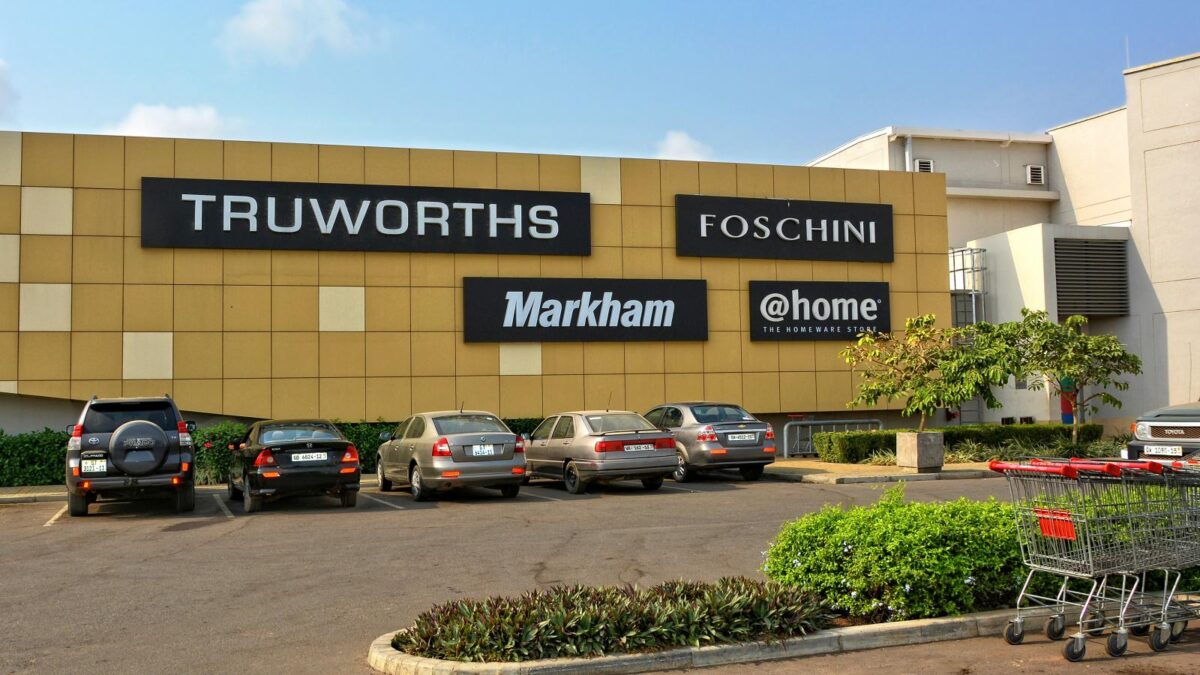
TFG CEO Anthony Thunstrom has recently announced that the fashion retailer will close more than 100 stores across South Africa.
The Foschini Group (TFG) is one of South Africa’s largest fashion retailers, with 3,432 stores across the country.
It owns many top retail brands, including Foschini, @home, American Swiss, Coricraft, Dial-a-Bed, Fabiani, Jet, Markham, and TotalSports.
Despite its strong position in the fashion retail market, the company has been facing significant headwinds in recent years.
In South Africa, it faces challenges due to low GDP growth, high unemployment, rising input costs, and increased competition from Shein and Temu.
Its international division is also facing challenges. Sales growth across TFG’s London and Australia divisions was stagnant or turned negative.
Earlier this year, TFG announced impairments of approximately R750 million due to its struggling Australian and UK operations.
TFG’s annual results for the year ended 31 March 2026 painted a picture of a company which is on a downward slope.
Group revenue increased by 7.2%, reaching R62.1 billion. However, it was flattered by acquiring White Stuff in the United Kingdom.
Headline earnings per share declined sharply by 33.5% year-on-year to R6.75, reflecting significant pressure on earnings.
The group’s gross profit margin contracted to 41.1% from 42.3%, reflecting intensified promotional activity to remain competitive.
Operating profit before brand impairments and acquisition costs fell by 22.1%, which was of concern to investors.
TFG closing stores across South Africa
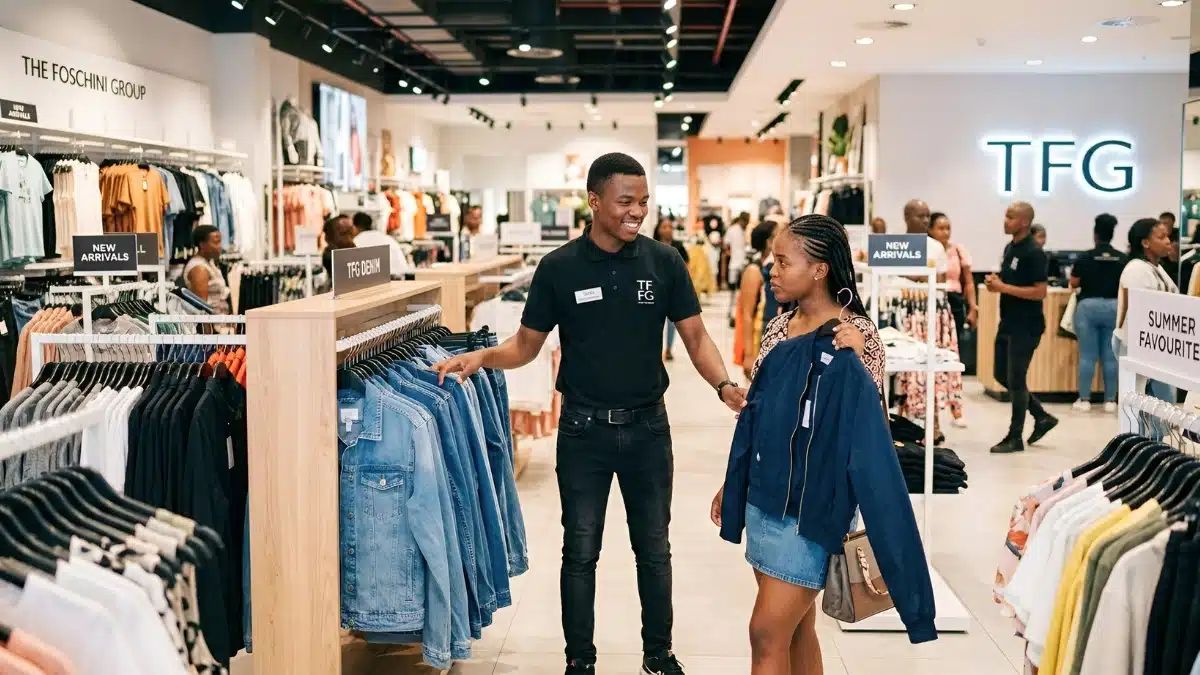
During the company’s annual results presentation, TFG CEO Anthony Thunstrom said that they embarked on cost-cutting strategies.
Store closures were the primary strategic pillar to reset the group’s profitability, capital efficiency, and return on capital.
He explained that the growth of TFG’s e-commerce platform, Bash, enabled the company to reduce the number of stores and still serve customers.
He explained that the R1.1 billion in online sales generated by Bash in the 2026 financial year was equivalent to opening more than 100 physical stores.
“Strategically, we are going to be aggressively leveraging Bash and our omni-fulfilment capabilities to move towards a more capital-light model,” he said.
“We are optimising our store footprint in light of economic reality and the increasing reach and penetration that Bash delivers.”
He said that the group has approximately 300 stores which they consider marginal and which are not performing as required.
“The ones that are loss-making are generally minimally loss-making, and a lot of those have fallen into that bucket over the last six months,” he said.
“That doesn’t mean we’re not dealing with them. We will close stores as quickly as we can, given the lease profile.”
Of these 300 stores, TFG will close just over 100 in the year ahead. This is in addition to the 100 stores the retailer closed in the previous year.
The company is also reviewing their marginal brands and simplifying its brand structures in South Africa and the rest of Africa.
“Our Africa business has assembled an incredible portfolio of 28 loved brands over many years. However, growth comes at a cost,” he said.
“The brand portfolio breadth has increased complexity and diluted the company’s returns in a tough market.”
He said that in the year ahead, they will consolidate their operating structures, remove layers, and increase agility.
“This will also enable us to fold structures of marginal brands into a more efficient, simpler operating structure,” he said.




 Loading ...
TFG (among others) lobbied for higher taxes on clothes imported by Shein. That happened, so why does TFG close stores?