
South Africa faces a serious economic risk


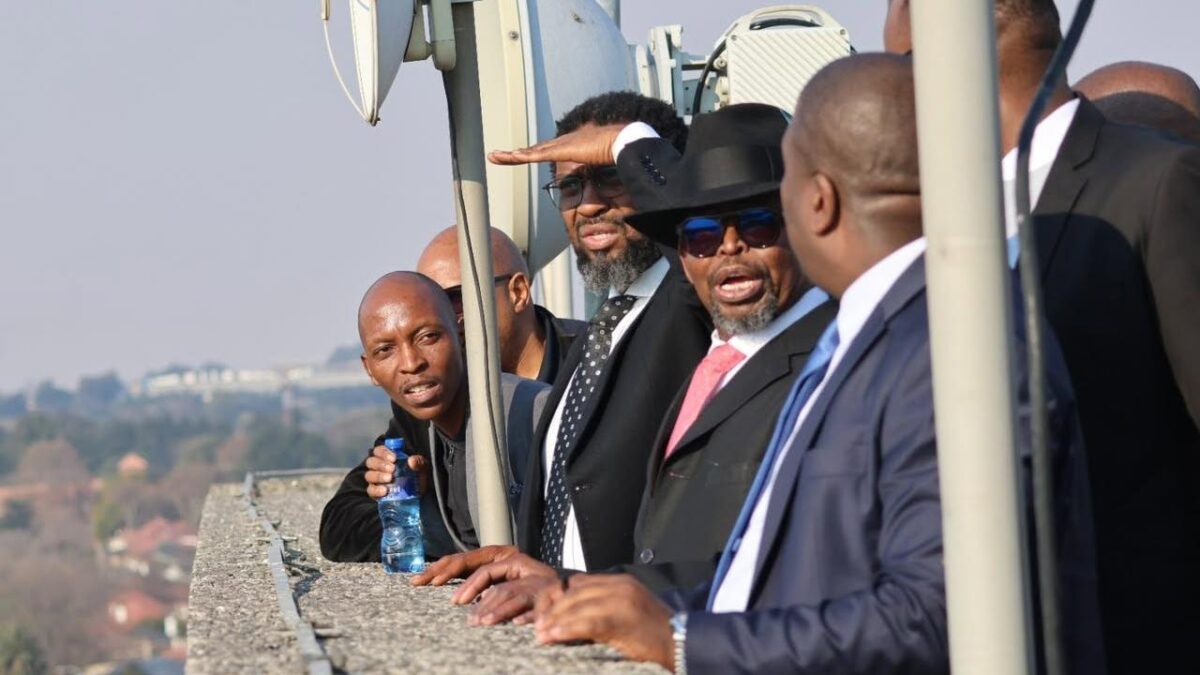
Business Leadership South Africa (BLSA) CEO Busisiwe Mavuso warned that municipal dysfunction is now a national economic risk.
Mavuso shared her views about South Africa’s economic challenges during an interview with Alishia Seckam on the PSG Think Big webinar.
Municipalities are the engines of local economies, providing the infrastructure, services, and governance that businesses rely on.
However, deteriorating service delivery, weak finances, and governance failures are undermining confidence and holding back that economic potential.
Mavuso said that while the full cost of municipal dysfunction is difficult to quantify, businesses often respond by redirecting investment elsewhere.
“A lot of businesses quietly choose to disinvest, without making too much noise,” she said in the interview.
In manufacturing hubs such as Nelson Mandela Bay, companies have had to take on responsibilities that should ordinarily sit with municipalities.
“You have VW adopting four substations, which means that if there’s anything wrong with those energy substations, it is VW’s responsibility,” she said.
This weakens South Africa’s investment case. “Those investment decisions are not made in South Africa. They are made elsewhere in the world,” said Mavuso.
“Capital is not sentimental. Investors allocate capital based on risk. They allocate capital based on stability, predictability, and returns.”
Johannesburg, South Africa’s commercial capital, has become a significant risk to the country’s economy.
“The city’s decline is no longer a local issue alone. This is where 16% of the country’s GDP is generated. So, its performance is critical to national growth,” she said.
Johannesburg’s deterioration has reached a point where businesses can no longer remain quiet. “Silence would be irresponsible from a business perspective,” she said.
Local government reform on the national agenda

The scale of the challenge has placed local government reform on the national agenda, with Operation Vulindlela’s second phase focusing on municipalities.
“The issue of municipalities is not just about the one small municipality. It is a national economic issue,” said Mavuso.
“At a national level, we’ve seen improved operational performance of Eskom and Transnet. We would now like to take that to the city of Johannesburg.”
A key reform priority is the ring-fencing of municipal utility revenues. Mavuso referenced the City of Johannesburg’s water revenue.
“The City of Joburg collected R11.9 billion in water revenue, and yet only R1.3 billion was used for anything water-related,” she said.
She also highlighted the need to professionalise the public service and intervene earlier when municipalities are failing.
The problem is not one of strategy, but of capability and accountability. “We have CFOs who don’t know the difference between income and cash,” she said.
Despite the scale of Johannesburg’s infrastructure backlog, Mavuso believes the problems are not insurmountable.
On water, for example, she argued that practical interventions could deliver visible improvements within a relatively short period.
“This is something that we can actually deal with within six months to a year, but you have to have political will on the other side,” she said.




 Loading ...
The ANC don’t seem to understand that it takes skilled people to run a municipality. Loyal cadres don’t qualify.