
Expropriation without compensation is here in a dangerous form


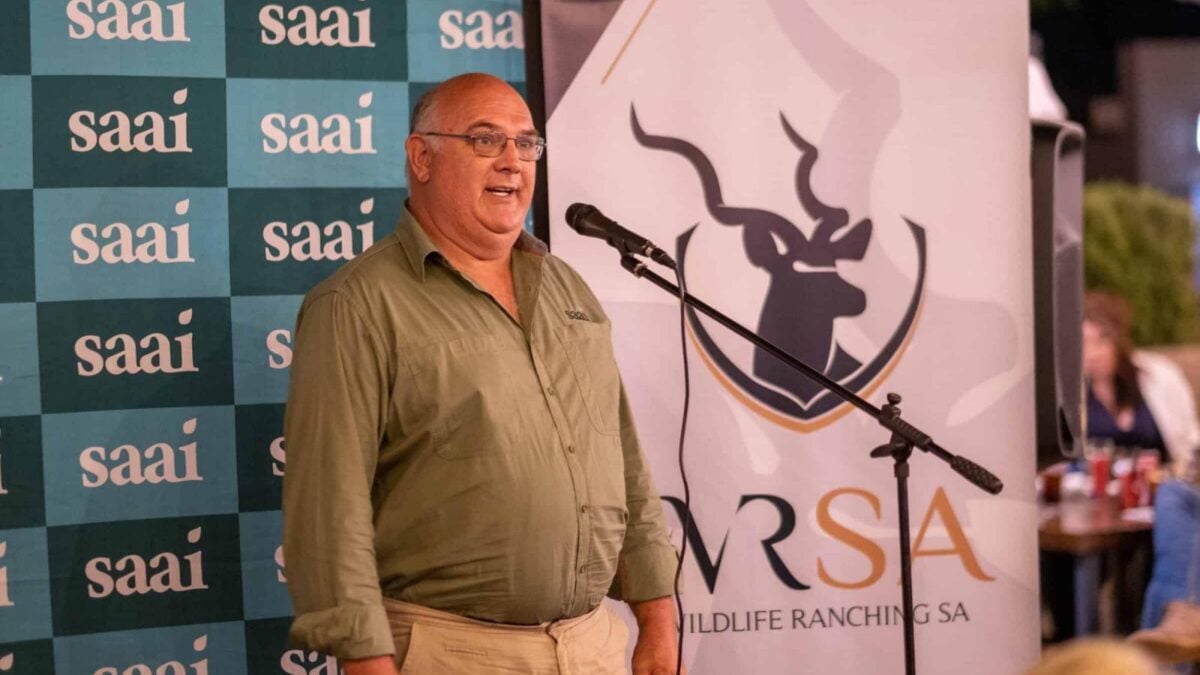
Theo de Jager warned that property rights are already systematically eroded in South Africa through creeping expropriation.
De Jager, an executive director at Southern African Agri Initiative (Saai) and a farmer himself, is a foremost expert on agricultural issues.
He serves as the president of the World Farmers’ Organisation and was the former president of the Southern African Confederation of Agricultural Unions.
In a recent presentation, De Jager said the battle against expropriation without compensation (EWC) in South Africa is crucial for farmers.
He added that the battle against expropriation without compensation, nil compensation, and below-market-value compensation is the same fight.
He told delegates that the South African Constitution does not fully protect property rights, as many believe.
He said that under Section 25(3), market value is only one of five vague yardsticks used to determine compensation.
Political figures have previously suggested using these clauses as discount clauses, which creates uncertainty and could push compensation to zero.
He further dismissed the argument that the Expropriation Act does not allow for expropriation without compensation, as zero or nil is a number.
Minister of Public Works, Dean Macpherson, stated that there is a distinct difference between without compensation and nil compensation because nil is a number.
“Saai has never signed up as many new members as we did on that single day at Nampo because farmers saw right through it,” he said.
“The farmers heard a very cheap political and technical trick designed to achieve expropriation without compensation.”
Theo de Jager warns about creeping expropriation
In his presentation, De Jager warned about a phenomenon that South African farmers refer to as creeping expropriation. This is hidden in property rights clauses.
“Creeping expropriation happens when they do not take your land, but they take some of the rights to the land.”
“Before you know it, you, as the owner, have fewer rights than other people who hold informal rights.”
He said farmers first saw this when Agri South Africa lost its 2014 court case over the expropriation of mineral rights.
“The court ruled that this was not expropriation, but rather deprivation. It argued that they were not the same thing.”
De Jager said that the South African Constitution requires compensation only when expropriation occurs.
“The moment the state positions itself as the custodian of resources, it places itself in a position to deprive instead of expropriate,” he said.
“The argument was that the state does not take ownership. It simply transfers ownership from the current owner to a new owner.”
This transfer happens without the asset ever passing through the state’s hands. “This is exactly what happened to mineral rights,” he said.
Shortly after that, the government started using the same language regarding South African farmers’ water rights.
“At the moment, farmers are holding their breath over the ongoing debate surrounding water rights,” De Jager said.
“There is also the growing belief that the land itself is a national asset, and that the state has a custodianship function to fulfil.”






 Loading ...
THEY ARE BORN THEIVES AND LIERS.