
One town in South Africa with almost no crime


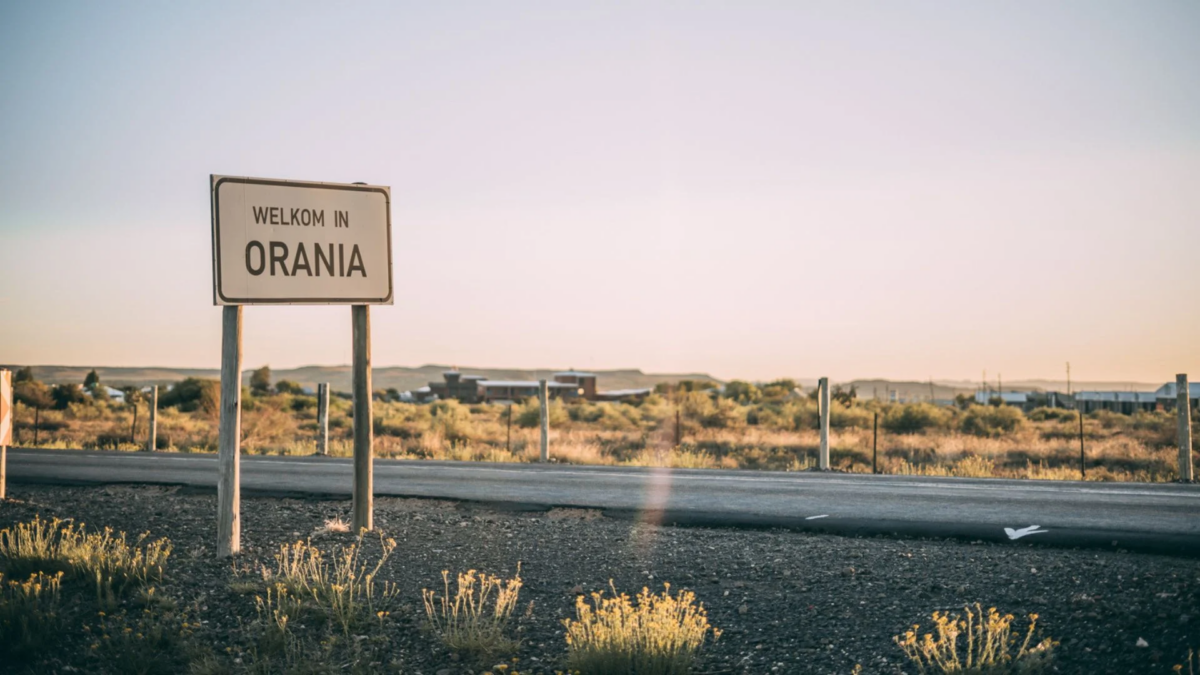
Orania is a small South African town located along the Orange River in the Karoo region of the Northern Cape province, and it experiences just four to five serious crime offences per year.
The Orania Movement’s communications officer, Frank de Klerk, says the town uses technology such as CCTV for surveillance.
However, the primary reason for its impressively low crime rate is a strict vetting process when people apply for permission to live in Orania.
This, combined with the Orania community’s accountability for its own safety, means serious crime offences are infrequent.
“We have a very, very low crime rate. When you look at things like robberies, murders, or higher-class offences, it’s such isolated incidents,” De Klerk said.
“If I could give a figure, it’d be about four or five offences a year.”
However, he admitted that Orania is no stranger to less serious offences, such as people failing to pay bills on time or committing parking violations.
De Klerk explained that every resident in Orania sees the town’s safety as their own responsibility, which complements the town’s strict vetting process for potential residents.
“What’s interesting about Orania’s safety and security strategy is the dependence on volunteers,” he said.
De Klerk explained that volunteers aren’t simply given free rein. Instead, they join organised safety teams.
“These volunteers will wear radios on their person during their time period, and they will be on standby with their radios at the ready,” he said.
Volunteer training is conducted professionally, and volunteers must get the necessary licences and certifications.
Supporting these teams are security vehicles that can be called out with sirens and other necessary security equipment.
According to De Klerk, the Orania Movement is highly selective about who it allows to live in Orania. Those interested in living there must apply for permission.
“If you have an extensive criminal record, or if you are a proven drug user and you seem like you will be a risk to the community, you won’t receive your right of residency,” he said.
“That has a big impact on the safety of the community as a whole.”
Not an isolated community
De Klerk said a common misconception about Orania is that it is highly isolated and a bubble where residents are lawless and make their own rules.
He emphasised that this isn’t the truth, adding that the town has strong relationships with neighbouring communities.
“We work together on many, many different issues,” he said.
“Our internal safety and security; we are completely dependent and responsible for that. That we do through our own Orania Veiligheidsdienste (OVD).”
However, it also has access to a police station in Hopetown to the northwest, and De Klerk said the South African Police Service (SAPS) will assist with more serious cases in the area.
“We try to help where we can,” he added.
As Orania receives no government funding, it operates with fewer resources. However, its safety and security infrastructure is privately funded, which gives it an advantage.
This gives the towns complete control over the funds’ efficient use and use them where they are needed most.
De Klerk said Orania’s security teams will assist in nearby towns, such as Hopetown, when necessary.
“Policing in South Africa’s rural areas, such as Hopetown, is often constrained by limited budget control. Our decentralised model shows how communities can manage resources more efficiently and effectively,” he stated.









 Loading ...
Now what is different about Orania to the rest of the country, barring maybe the WC? Oh yes………..