
Half a million hopeful South African university students receive the cold shoulder from just one university


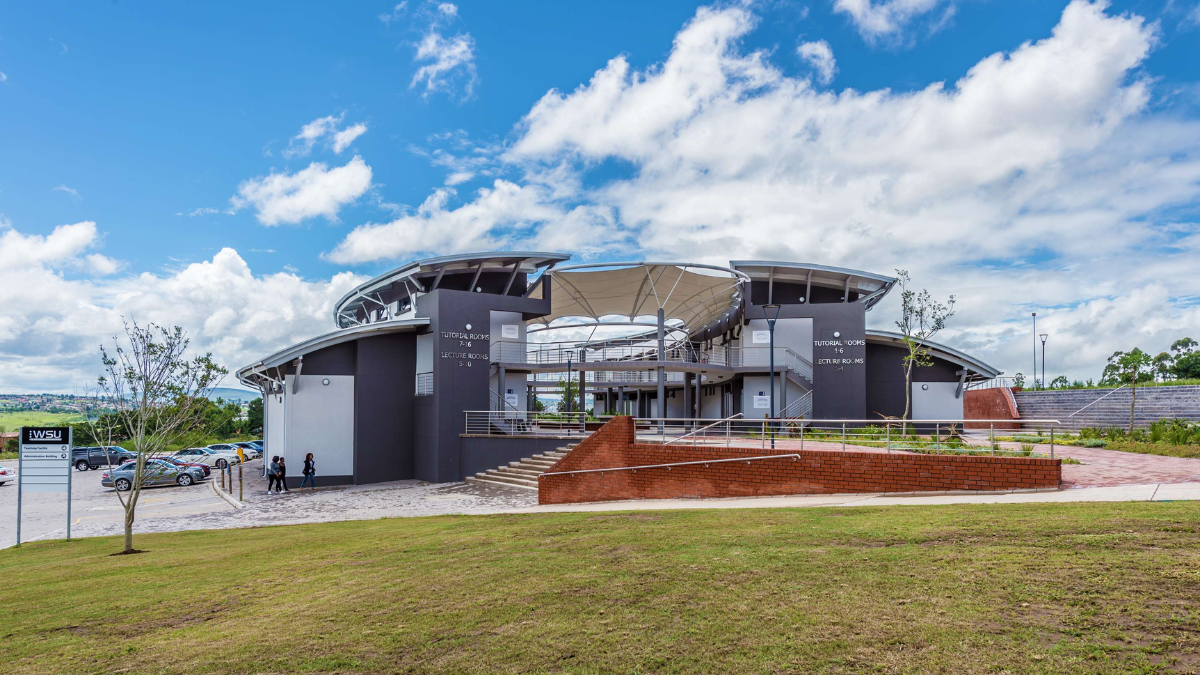
Approximately 500,000 applicants were turned away at Walter Sisulu University (WSU) for 2026 admissions due to severe infrastructural issues and an alleged lack of government support.
WSU, located in the rural Eastern Cape, faces an overwhelming volume of applications, exceeding its student capacity, due to its accessibility to surrounding impoverished communities.
The university had around 7,000 available spaces for 2026, with WSU Council Chairperson Advocate Tembeka Ngcukaitobi telling Parliament’s Portfolio Committee on Higher Education during a 2 February oversight visit that much needs to be done.
Ngcukaitobi told the Portfolio Committee that the limited infrastructure and an inflexible enrollment plan make it impossible to accommodate more students.
“The system is deliberately producing young people who will never acquire the skills needed to participate in the economy. At the very least, we should accommodate them within virtual walls,” Ngcukaitobi said.
“With the right investment, the university could accommodate up to 60,000 students through a mix of on-site and off-site learning,” he said.
WSU and Parliament have called for urgent intervention from the Department of Higher Education and Training (DHET) after a recent oversight visit revealed several problems.
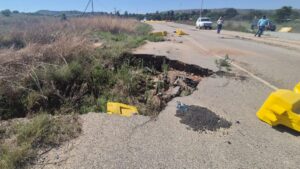
A critical constraint is the lack of digital investment, as well as the inability to develop infrastructure on campus property and the surrounding areas.
The land belongs to the Department of Public Works and Infrastructure, according to Adv. Ngcukaitobi, their lack of action is delaying much-needed development.
The absence of the Director-General and senior DHET leadership drew sharp criticism, particularly given the pressure the institution is currently facing.
Further concerns were raised over the maintenance of WSU’s ICT labs and Student Services Health Centre.
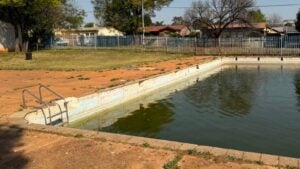
Member of the Portfolio Committee on Basic Education, Dr Delmaine Christians, noted buildings in a state of deterioration, despite adequate upkeep by the previous government.
In comparison to the University of Venda (UNIVEN), Dr Christians said that rural locations cannot be an excuse for unfavourable conditions.
She pointed to UNIVEN’s approaches to infrastructure management and resource allocation as proof that rural universities can maintain standards with proper planning.
“Both institutions operate in rural settings but have produced different outcomes. Universities must show innovation and a willingness to turn things around. Where that exists, DHET must come in and support,” she said.
According to the Committee, the university’s plans to expand are ambitious but achievable. With proper support from the DHET, universities can improve access and quality of education.
WSU is the only South African university to host a research chair in Indigenous Knowledge Systems and was awarded a top-five spot in the Times Higher Education Rankings.
A universal problem

WSU’s failing infrastructure is not an isolated problem, but rather an issue that plagues South Africa’s public universities.
In January 2026, major urban universities, including Wits and UJ, were impacted by bulk water supply failures.
This included an explosion at the Zuikerbosch water treatment plant in January. This failure not only impacted universities, but extended to the entire Gauteng province.
Institutions face significant infrastructure constraints, primarily driven by insufficient funding to accommodate increased enrollment numbers, student housing and campus upkeep.
Key challenges include ageing facilities, ICT connectivity problems, and limited maintenance budgets.
These limited budgets impede teaching, research and overall student performance, especially in the case of Historically Disadvantaged Institutions (HDIs).
These challenges are compounded by the need for massive, long-term investments in new, sustainable, and technologically advanced facilities to meet future student demands.
Budget cuts and sector-wide maintenance backlogs paints a dim future with institution warnings of a multibillion-rand crisis.
The South African public university system is grappling with a substantial infrastructure funding shortfall in 2026.
Of the R100.4 billion total university education budget for the 2026/27 financial cycle, only R1.246 billion is allocated for repairs and upgrades through the Infrastructure and Efficiency Grant (IEG).
Failing infrastructure is causing many students to opt for a tertiary education at a private institution.
The Minister of the DHET, Buthi Manamela, has been actively urging 2025 matriculants to consider alternative pathways for tertiary education.
In 2026, the total number of students enrolled in private higher education institutions (PHEIs) in South Africa is estimated at over 300,000, 7% higher than that of 2025.
Major players under private institutions for enrollments included STADIO with 56,000 students and ADvTECH with 60,067 full-qualification enrollments in 2025.
The inconvenience caused by failing infrastructure on campuses isn’t the only reason students are turning towards private institutions.
Infrastructure problems can compromise the quality of education, which makes graduates less competitive for employers which is a critical concern in South Africa’s tight job market.
South Africa’s unemployment rate is projected to hit 32.50% in 2026. The Quarterly Labour Force Survey also indicates the graduate unemployment rate is 10.4% as of February 2026.
Other tertiary training graduate unemployment rates, including vocational and technical, stand at 37.7%, despite a shortage of employees in the sector.
- By Zané Steyn for Newsday.
This article has been updated to reflect that the 60,067 enrolment figure for ADvTECH is 2025 data.





 Loading ...