
Eskom threatens solar users in South Africa with fines and disconnection


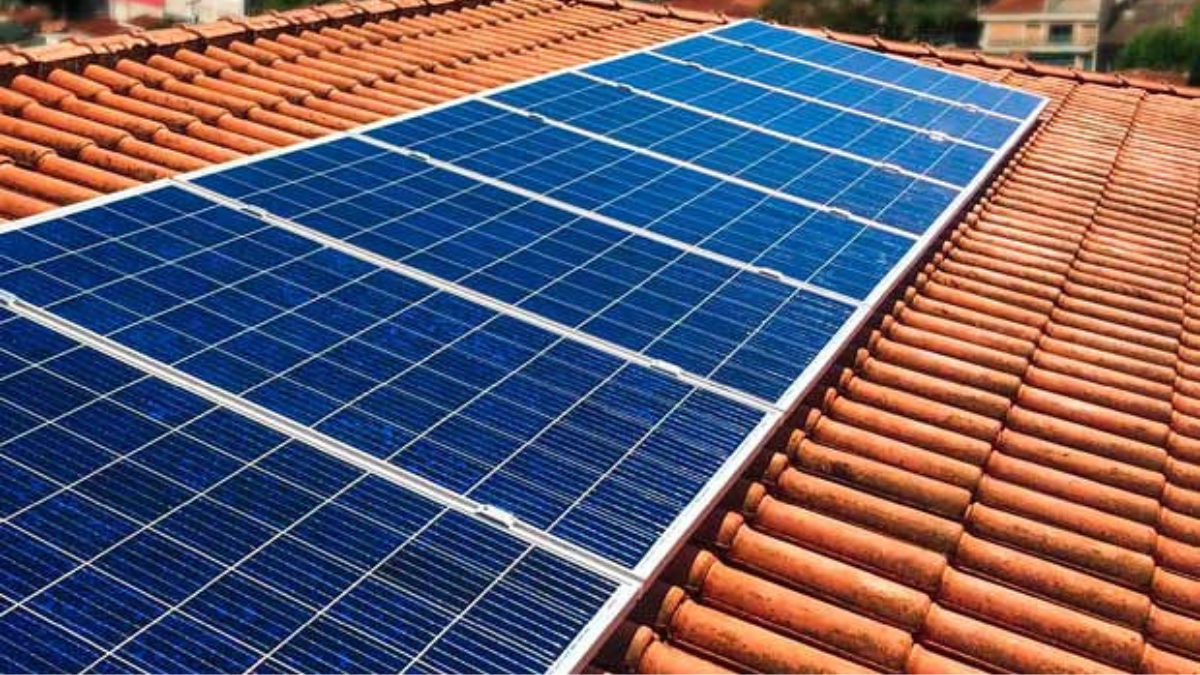
South African households are receiving threatening communications from Eskom and municipal entities, including Johannesburg’s City Power, demanding that they register their solar installations.
This is according to the Organisation Undoing Tax Abuse (OUTA), which said it has experienced a surge in queries and concerns from those receiving warnings to register small-scale embedded Generation (SSEG) under 100kVA.
The organisation says that Eskom has threatened these individuals with fines or with the disconnection of their electricity supply if they do not register.
OUTA called the process “impractical, irrational and unfair,” saying that Eskom’s significant amendments to earlier supposed requirements and deadlines have generated more uncertainty and ambiguity.
Eskom recently published a warning to its customers to “act now, stay legal, stay safe” and register their generation on 14 January.
Under Schedule 2 of the Electricity Regulation Act, all systems under 100 kVA must be registered with a network service provider.
Eskom is currently covering the cost of registration for residential systems under 50 kVA, which it says are the “vast majority”. Eskom is covering registration fees of up to R10,000 until the end of March 2026.
The power utility had previously said that all solar systems must be signed off by an Engineering Council of South Africa-registered professional, but dropped this requirement in October 2025.
The registration process, including tariff conversion fees and connection charges, would cost the average household with a 16 kVA system R9,132, according to Eskom. After March 2026, customers will be liable for these charges.
Uncertainty and ambiguity

“What is at stake here are the rights of citizens who have gone to significant personal expense to protect themselves against years of escalating electricity prices and an unreliable power supply,” said OUTA CEO Wayne Duvenage.
“People have installed gas appliances, solar power systems, generators, inverters and other alternatives, in direct response to Eskom and Government’s calls – as well as incentives – to reduce electricity demand.”
He said this uncertainty has now caused delayed solar installation projects, as financiers, insurers and installers are unsure how to proceed.
“Government often makes the mistake of believing that certain processes and desired administrative functions can magically be introduced through threats and administratively cumbersome regulations or new laws,” said Duvenage.
“In fact, it is practicality, rationality and public acceptance that are the most important ingredients for successful implementation.”
The organisation said that Eskom has received clear indications that the new laws lack public acceptance or feasible application.
Provided that the installation is safe, compliant in terms of national legislation, and the customer continues to pay for electricity, OUTA asserts that what a homeowner does behind the meter is none of the supplier’s business.
The messages sent to customers were labelled as a “coercive tactic” by Eskom to “create fear and panic and force unwarranted so-called compliance requirements.”
Eskom said that “registration of an SSEG system is commonplace worldwide and helps ensure a home or business is safe, technicians are protected when working on the network, and the community electricity supply remains reliable.”
Forced to convert to a postpaid system

Registering the system, however, also requires rooftop solar owners who are prepaid users to convert to the postpaid system.
This would mean that solar users are required to pay a fixed monthly cost every month and are liable to be cut off or fined for non-payment, regardless of offsetting their electricity use with solar.
This angered the Democratic Alliance in Johannesburg, which called it “a power grab by City Power against residents who invested in solar.”
Both OUTA and energy Expert Chris Yelland question the legality of Eskom’s threat to issue fines or disconnect customers for not registering.
“There are some serious legal questions about whether Eskom has the authority to issue a fine on a customer for not registering a system,” said Yelland in an interview with Radio 702.
“Eskom commonly refers to the Electricity Regulation Act to justify this. I just want to say categorically that if you read the Electricity Regulation Act and the scope of the act, it specifically excludes residential installations,” said Yelland.
Yelland says Eskom does not have the authority to fine customers. It has the authority to cut customers electricity off, but only in certain circumstances, such as for unsafe systems or non-payment.
He insists that if users have a certificate of compliance for their system and can prove this, Eskom cannot disconnect them.
Eskom’s Distribution General Manager, Kevin Pillay, said on an episode of the Money Show with Stephen Grootes, that the utility does not plan to fine users in the near future, but asserts that Eskom does have the legal ability to do so.
Duvenage advises that rooftop solar owners refrain from registering their systems for the time being, and suggested the organisation may legally challenge the new regulations.








 Loading ...
Come cut me off. Even less income for the municipality to pay their incompetent and criminal staff.