
Land invasions in South Africa’s richest province



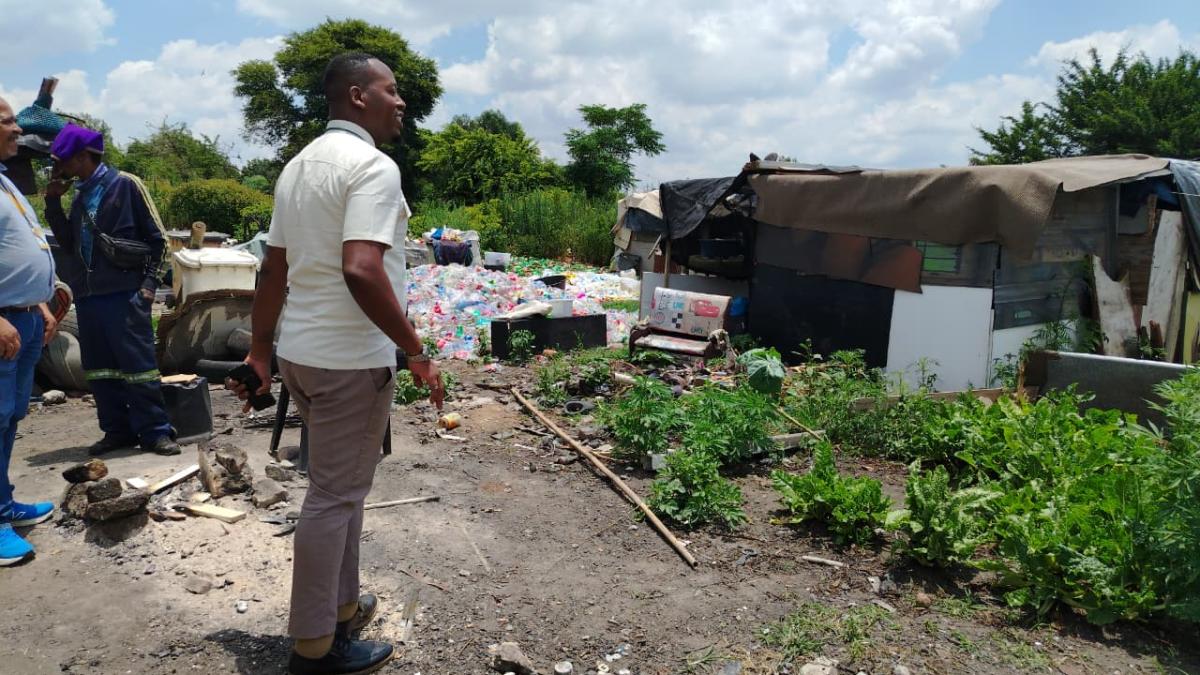
A Democratic Alliance (DA) oversight visit across four informal settlements in Gauteng revealed incited land invasions and land fraud.
The party said this oversight visit exposed the reality of South Africa’s housing crisis and the consequences of decades of ANC failures in human settlements.
One of the problems is the PIE Act (Prevention of Illegal Eviction from and Unlawful Occupation of Land Act, 1998).
This act fundamentally changed how property owners can deal with people living on their land without permission.
The act aimed to replace the immediate evictions of the past with a process that respects human dignity and prevents homelessness.
A landowner must apply for a court order, provide at least 14 days’ notice of a hearing, and prove to a judge that the eviction is just and equitable before evicting anyone.
In practice, this act is seen as facilitating land invasions due to the practical and legal hurdles it creates for property owners.
The legal process can take months or even years. During this time, orchestrated land invasions can grow from a few shacks to a large settlement.
A good example is the Tygerberg Raceway, a once-thriving motorsport venue in Kraaifontein that was permanently lost to an orchestrated land invasion.
The invasion began in 2020, when, over the course of just a few days, thousands of people moved onto the private property.
Reports indicate the invasion was well-coordinated, with shack farmers and organisers allegedly selling plots of land to desperate or opportunistic occupiers.
The raceway’s infrastructure, including the track itself, grandstands, and club facilities, was dismantled or destroyed.
The land was quickly levelled to make way for thousands of informal structures, which were erected rapidly.
The owner, Chris Liebenberg, attempted to stop the invasion but faced significant legal hurdles, which ultimately cost him the land and his business.
Democratic Alliance oversight visit in Gauteng

The DA’s oversight visit across four informal settlements in Gauteng highlighted the problems the PIE Act and a weak government cause.
The DA is now leading the charge in Parliament to close the legal loopholes that enable this chaos through amendments to the PIE Act.
“Our reforms will criminalise the incitement of illegal land occupations and strengthen the criteria courts must consider in eviction cases,” the DA said.
“This approach targets criminals while ensuring state resources are focused on those who genuinely need housing.”
The DA also took aim at the ANC government, saying the prior National Ministers of Housing and Human Settlements have failed dismally to build new homes.
The party said that over the past 30 years, the ANC government failed to satisfy the needs of a growing housing waiting list.
“The failure to build houses for a growing housing waiting list has left millions of South Africans forced to live in squalor,” it said.
Since 1994, the housing backlog in South Africa has grown to an estimated 13.3 million people.
“Even as budgets have increased, the Department of Human Settlements is building fewer homes,” the DA said.
This has fueled people illegally occupying privately-owned land where criminal syndicates exploit the need by inciting land invasions.
These criminal networks are also illegally selling or renting out land they don’t own, as they know how to abuse the PIE Act.
“The ANC’s failure has left millions of South Africans trapped in informal settlements and vulnerable to exploitation by criminal syndicates,” it said.
“Illegal land invasions have become a growing crisis, undermining lawful housing processes and draining public resources.”
The Department said it is addressing these challenges through a multi-pronged approach.
They told Newsday that this includes upgrading informal settlements, the provision of interim basic services, the acquisition and release of suitable land and the implementation of sustainable human settlements programmes.
“While notable progress has been made, the demand for housing continues to outpace supply.”
“The Department remains committed to lawful, orderly, and integrated development processes that seek to restore dignity, improve living conditions, and advance long-term spatial transformation in Gauteng.”
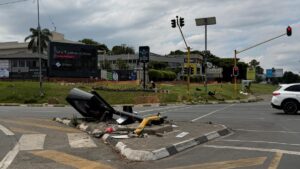
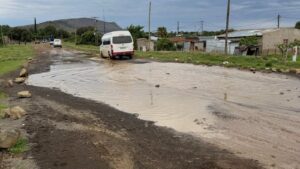
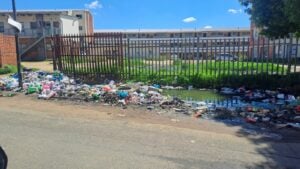
Images from the oversight visit








 Loading ...
In my opinion, the PIE act needs some changes made to it. If I own a property and choose to rent it out, I do not expect to be elevated to the position of not being able to get difficult tenants out without having to spend large sums of irrecoverable money on lawyers and court fees. Also to be taken into account is the repair costs due to wilfull damage caused by a tenant and the possibly months of no income from the property because your tenant does not like the alternative property you have found them. It is not fair or logical to place the burden on the property owner of finding an alternative place for non paying or poor quality tenants to live in. Anyone who has rented out property over a period of years will have possibly experienced tenants who apart from not paying also think its OK to trash your property because you are forcing them to leave. You cannot walk into a shop and demand goods and not pay for them. I do not see the difference between the two. There have been some really bad situations due to these stupid laws in SA and other countries where the right full owner cannot enter their own property without the tenants permission because some people have hijacked their building while the owner was out.