
South Africa’s richest province has a serious crisis: mushrooming informal settlements


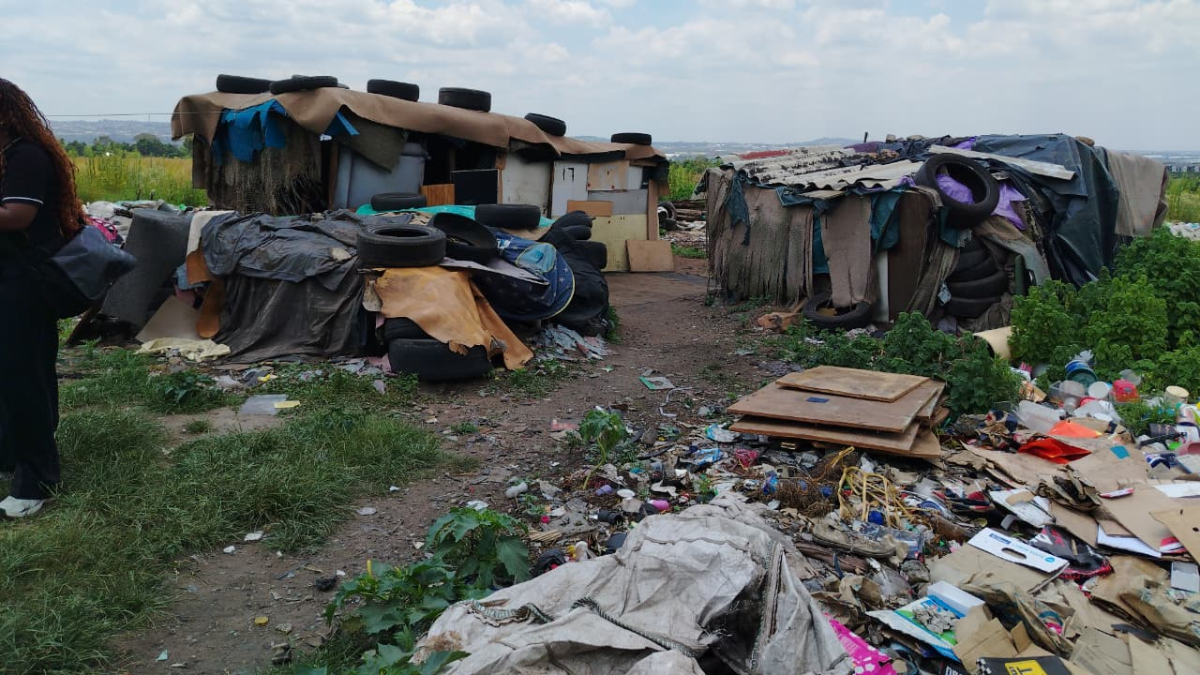
The Democratic Alliance (DA) reports that Gauteng is facing an increasingly serious crisis of expanding informal settlements taking over private land, while housing backlogs continue to grow.
On an oversight visit to four informal settlements in Gauteng, the DA spokesperson on Human Settlements, Luyolo Mphithi, said that “incited land invasions” and “land fraud” are a consequence of decades of African National Congress (ANC) human settlements failures.
“Over the past 30 years, prior National Ministers of Housing and Human Settlements have failed dismally to build the homes needed by a growing housing waiting lost,” he said.
“This has left millions of South Africans forced to live in squalor, including illegally occupying privately-owned land where criminal syndicates exploit the need by inciting land invasions, illegally selling or renting land they don’t own.”
The Gauteng Department of Human Settlements itself acknowledged that informal settlements are a significant and growing problem in the province.
“This is largely driven by rapid urbanisation, inward migration, population growth, and persistent socio-economic pressures that continue to place strain on available land and housing resources,” the Department told Newsday.
These settlements emerge on both public and privately owned land, including land that is not suitable for residential development.
This presents complex legal, planning and service delivery challenges for the Gauteng Department, particularly in ensuring compliance with land-use legislation while balancing the urgent humanitarian needs of affected communities.
Since 1994, the housing backlog has grown to an estimated 13.3 million people, and the party has found that, despite ever-increasing budgets for the department, fewer and fewer homes are actually being built.
In 2012/2013, the Department received a R25 billion budget and managed to build 115,079 homes.
In the 2024/2025 financial year, in contrast, the Department received a R34 billion budget and had a target of only 28,776 homes.
By contrast, when the current housing system was developed and first introduced, an article from The Guardian reported that the government built more than 235,000 houses in the 1998/1999 financial year.
The Gauteng provincial legislature portfolio committee on human settlements was flagged for its poor performance in 2025, when the National Department of Human Settlements cut its budget by R450 million due to unsatisfactory performance.
In September 2025, illustrating the scale of the problem, Gauteng Premier Panyaza Lesufi said that the government found 400 new informal settlements had recently emerged across the province.
A growing crisis
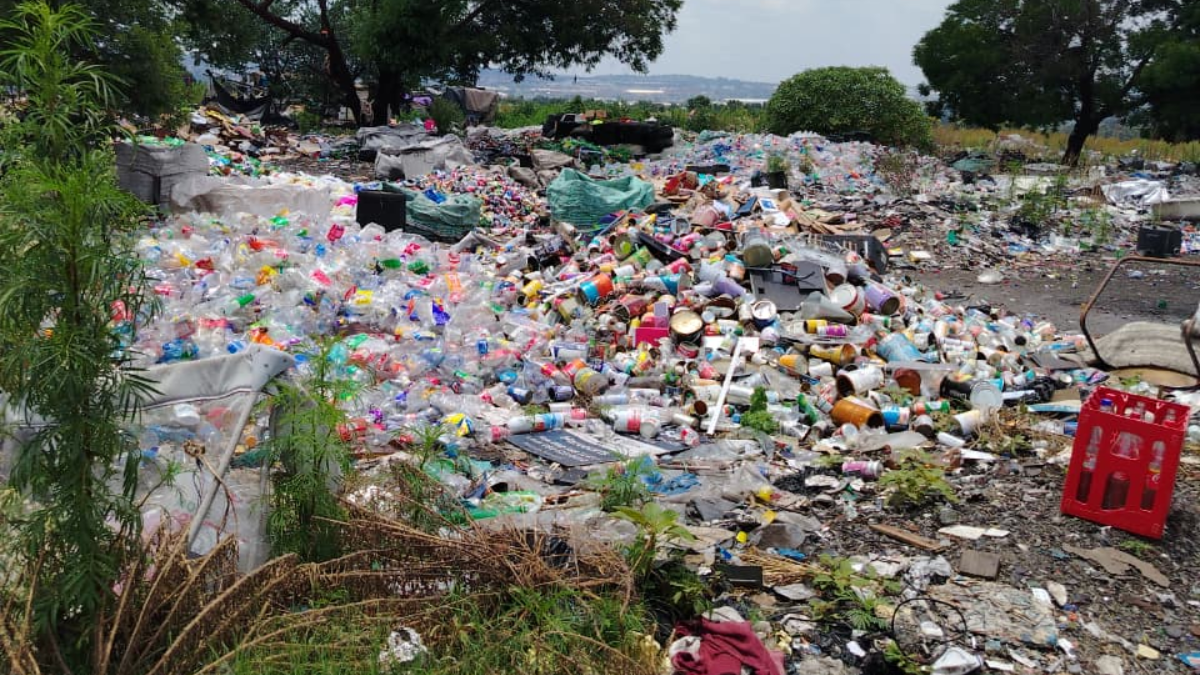
Gauteng has more than 1,000 informal settlements, many without water, sanitation or electricity. Municipalities are forced to divert housing budgets to contain the fallout.
“The failure has left millions of South Africans trapped in informal settlements and vulnerable to exploitation by criminal syndicates,” said Mphiti.
“Illegal land invasions have become a growing crisis, undermining lawful housing processes and draining public resources.”
The DA argues that the taxpayer is forced to pay twice: once to fund legitimate housing projects and again to cover the cost of illegal connections, lost revenue and service disruptions from the informal settlements when the housing projects don’t deliver.
The party is proposing a bill in Parliament to close the legal loopholes that allow for illegal land occupation.
This would criminalise the act of illegally occupying land, and strengthen the criteria courts must consider in eviction cases, as well as fast-track housing delivery.
This would allow for those on private land to be not only evicted but also criminally charged and face a jail sentence of up to five years.
The Prevention of Illegal Eviction from and Unlawful Occupation of Land Act 19 of 1998 (PIE) currently requires land owners to apply to the court to have illegal occupiers evicted.
It requires that evictions be conducted fairly, without discrimination against an individual or group, such as non-nationals.
It also requires that the state provide temporary alternative accommodation if the illegal occupiers are unable to secure their own.
The Department said it is addressing these challenges through a multi-pronged approach.
They told Newsday that this includes upgrading informal settlements, the provision of interim basic services, the acquisition and release of suitable land and the implementation of sustainable human settlements programmes.
“While notable progress has been made, the demand for housing continues to outpace supply.”
“The Department remains committed to lawful, orderly, and integrated development processes that seek to restore dignity, improve living conditions, and advance long-term spatial transformation in Gauteng.”
Update: This article has been updated with comments provided by the Gauteng Department of Human Settlements.






 Loading ...
Totally unacceptable.
Solutions:
* Get rid of current regime
* Institute proper governance
* Stop illegal immigration
* Stop uncontrolled flood of babies. Birth control. Accountability 4 caring 4 children
* Stricter bylaws and SAPS action ( Get rid of current Police management structure
* Heavy penalties