
ANC rapidly losing votes in this failing South African municipality


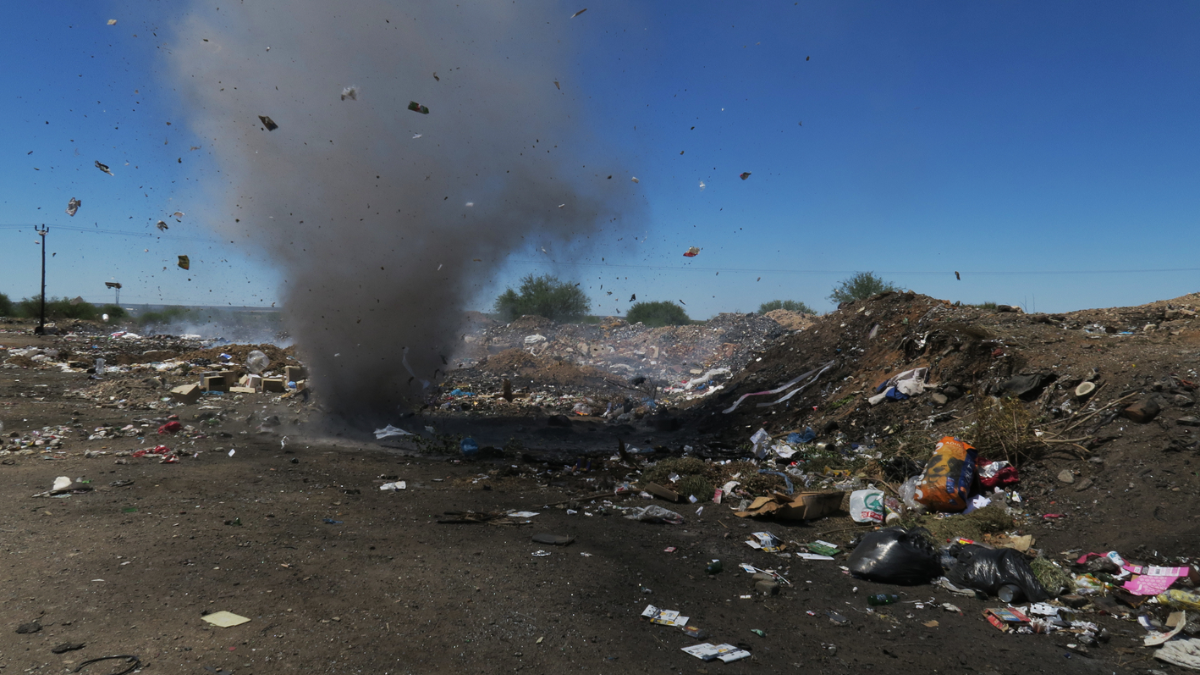
A recycling centre in the Northern Cape town of Douglas caught alight during scorching midday heat on Wednesday 5 November.
A dense, thick black plume of smoke rose into the sky as tons of baled plastic, paper, and cardboard burned, along with buildings and a car.
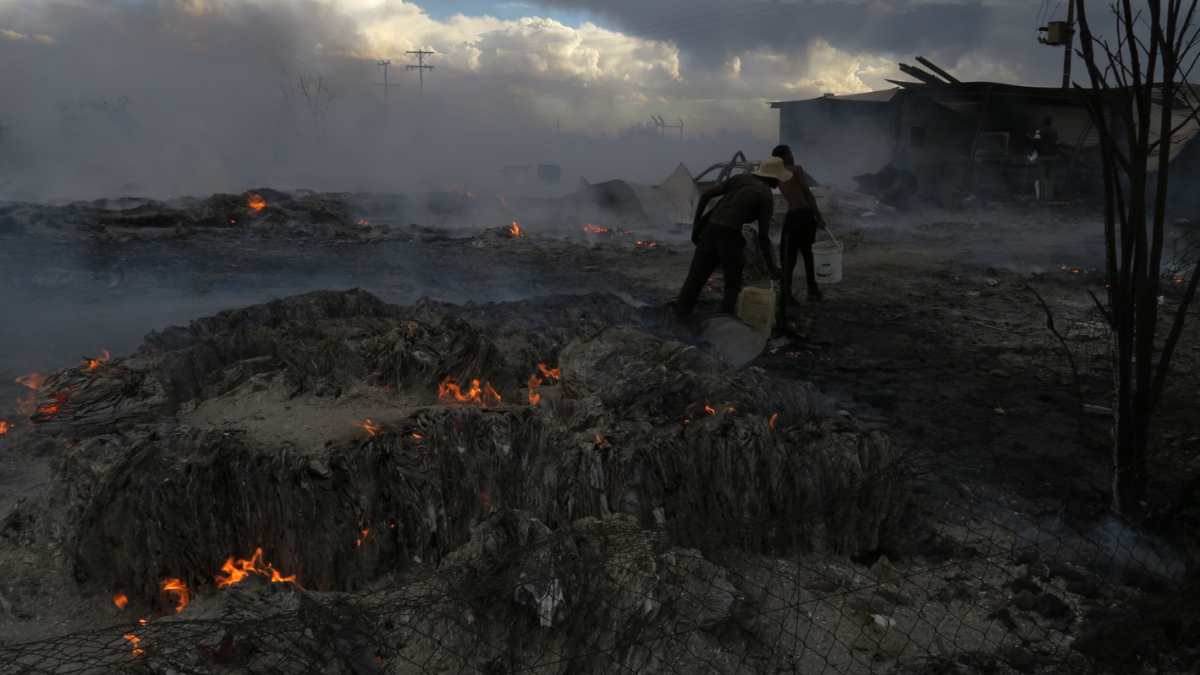
Amidst the choking smoke, staff, as well as children from the nearby informal settlement used buckets filled from a standpipe to try to quell the blaze.
The only fire fighting assistance the municipality could offer was a water tender consisting of a 5,000l tank with a pump and hose attached to a trailer drawn by a tractor.
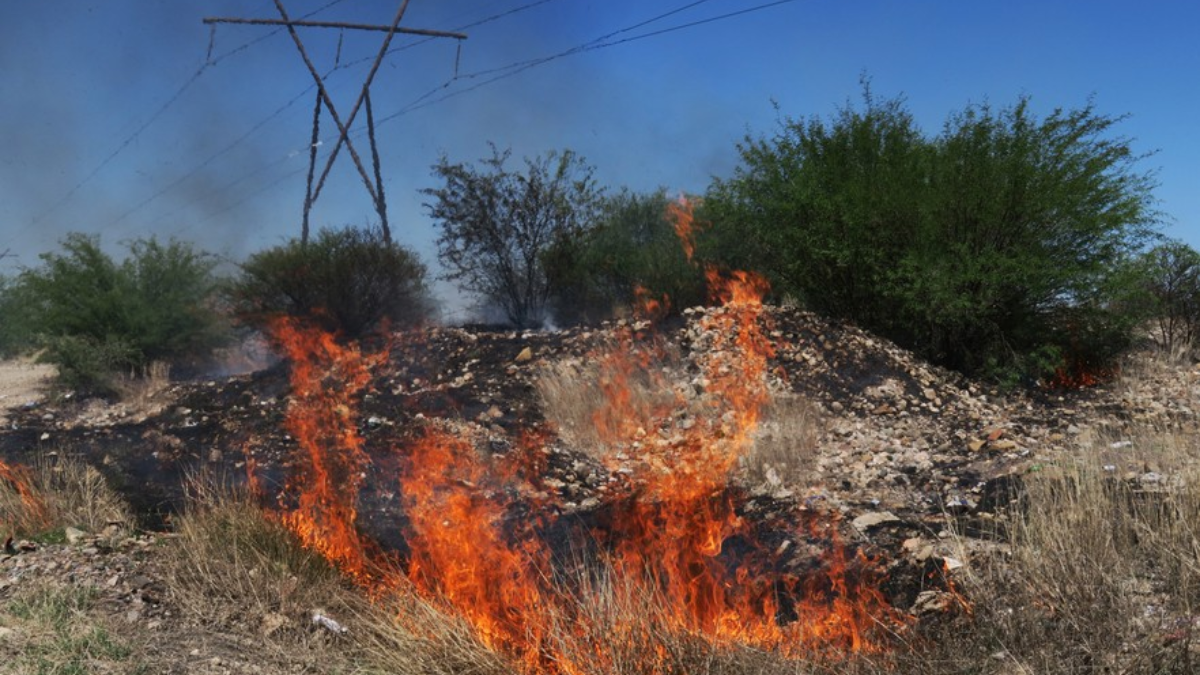
The fire started at about 2pm, it was still burning at 5pm, and had spread to the surrounding veld.
Given the lack of municipal fire fighting equipment in the rural, agriculture-based town, it was fortunate the breeze was moving the fire toward the Vaal River and the golf course where it was likely to die out on the well-irrigated greens.
Had the wind blown from the south, toward the informal settlement, there would likely have been a far more tragic outcome.
Ward councillor Lemfvia van Niekerk (DA) confirmed there was no proper fire fighting capacity in Douglas, nor in Siyancuma Local Municipality’s other towns of Campbell, Schmidtsdrif, and Griekwastad.
Van Niekerk said the Pixley ka Seme District Municipality had in the past promised to provide fire fighting capacity, but nothing had come of it.
Yet, according to its annual financial statements, the Siyancuma municipality spent R1.34-million on a fire brigade in the 2023/4 financial year and R1.24-million in the last financial year.
The municipality can charge landowners for fire fighting services, but no income from fire fighting has been recorded for the last two financial years.
The municipality does, however, appear to be planning to get a fire fighting truck, with a provision of R2-million for one included in the 2023/24 Budget Implementation Plan.
Waste lands
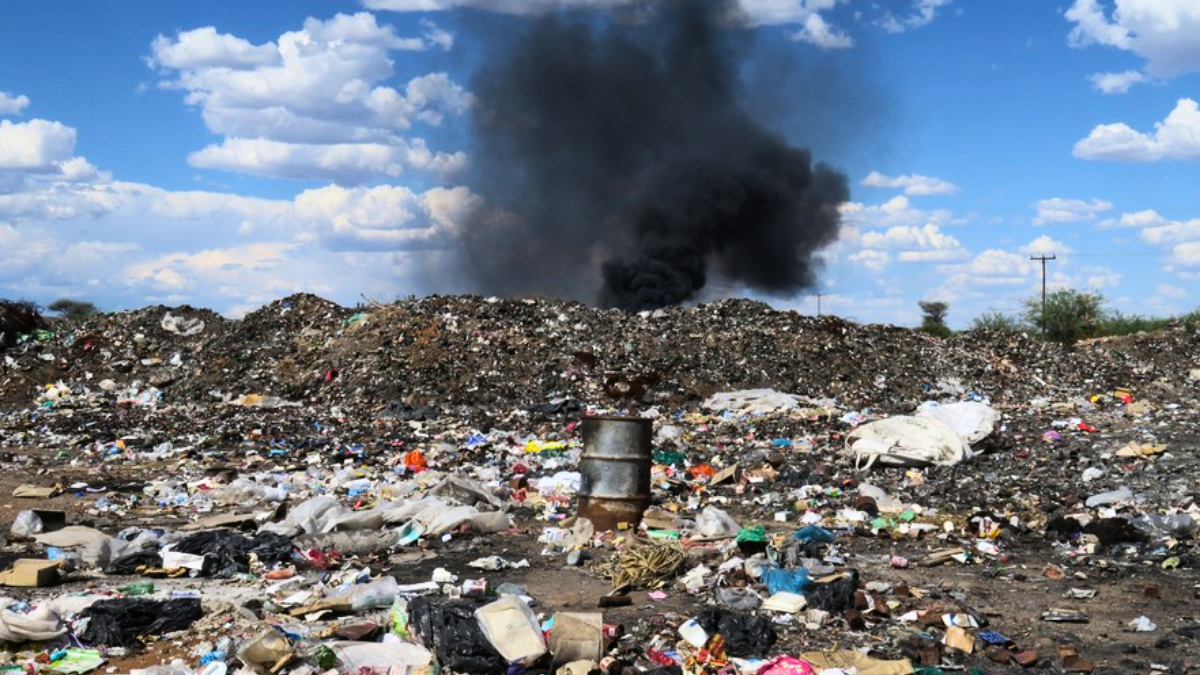
As burning bales of plastic sent black smoke into the sky, waste pickers at what constitutes Douglas’s landfill, who rely on buy-back centres to eke out a living, were not too concerned about the loss of the recycling centre.
“There’s another one on the other side of town,” said Andries Bezuidenhout, who collects cans and metal at the dump for recycling. But they would have to cart their recycling an extra 4km across the river.
Bezuidenhout and his colleagues, sometimes with children in tow, toil in summer heat often reaching 40C, interspersed with thunder showers, with only a few scorched, scanty thorn trees for shelter.
The nearest tap is next to the road, about 500m away from the centre of the dumping area where numerous fires smoulder and burn, emitting toxic fumes from plastic and metals. There are no municipal officials to check waste at the entrance, and hazardous waste could be seen amidst the household refuse.
There is no entrance, no weighbridge, and no signage, not even to indicate where the landfill is.
The only evidence that anything is done by the municipality, or that the site is designated as a landfill at all, is that in places the waste has been pushed into mounds, presumably by a bulldozer.
However, no equipment for waste transport, waste compacting, waste covering (with soil), or equipment for transporting the waste covering material, is recorded in the municipality’s current 2025/26 Integrated Development Plan (IDP).
This applies not only to Douglas, but to the other three towns in the municipality as well.
There are Waste Management Licences for the landfills in Douglas and Campbell, according to the IDP, but both landfills are marked as non-compliant.
There is no such licence for dump sites in Griekwastad, although satellite imagery suggests it is more contained, and possibly better managed, than the land fill in Douglas.
No landfill is marked for Schmidtsdrif, which is a settlement of about 500 households.
In its national audit of municipal landfills (which is supported by the Department of Forestry, Fisheries and the Environment), AfriForum scored Douglas’s landfill as 0% compliant with national legislation.
On the AfriForum scorecard, 80% is the minimum score necessary for compliance. The highest scored for the Douglas landfill was 10% in 2021.
Griekwastad landfill was scored at 4% compliant in 2025, the first time it had been inspected by Afriforum.
Polluting the Vaal
The Douglas landfill site sprawls across the veld to the banks of the Vaal River, raising concerns over toxic material leaching into the river, which is already highly polluted by failing waste water treatment works at every town upstream, with the exception of Sasolburg, all the way to Standerton in Mpumalanga.
Tests undertaken by Rand Water on 10 December, for example, show E. coli counts of more than 81,000 colony forming units per 100ml (cfu) in the Vaal River at Vereeniging.
Any count above 400cfu carries an increasingly high risk of gastrointestinal disorders. By comparison, the E. coli count in effluent released from sewage treatment works should contain less than 1,001 cfu.
Excluding Vereeniging, and discounting releasing effluent into tributaries, there are 12 towns upstream of Douglas pumping about 90-million litres of mostly untreated sewage into the Vaal River every day.
Siyancuma municipality treats water from the Vaal River in order to supply drinking water to Douglas and Schmidtsdrif.
But municipal manager Madoda Vilakazi told the Human Rights Commission last October that the water in the Vaal is so polluted that the new water treatment plant – built from a Department of Water and Sanitation infrastructure grant – is struggling to purify the water to drinking quality standards.
Even though the water treatment plant was upgraded about 18 months ago, the Department of Water and Sanitation (DWS) Integrated Regulatory Information System in December showed Douglas had a less than 20% compliance with minimum microbiological standards (the presence of faecal indicator organisms such as E.coli).
The minimum compliance standard is 97%. The town of Campbell, which is supplied by groundwater, was at 50% compliance with microbiological standards.
Schmidtsdrif, supplied by water treated from the Vaal, had 78% microbiological compliance, while Griekwastad, also supplied from groundwater, had 96% compliance, which DWS considers “poor” rather than “bad”.
While Douglas may be struggling to meet drinking water quality standards due to the high levels of pollution of the water extracted from the Vaal, the municipality is itself contributing to the pollution of the Vaal, and of the Orange River, which joins the Vaal about 18km downstream.
The Douglas sewage treatment plant, which is adjacent to the landfill, shows a 0% compliance with all four effluent quality indicators.
This is probably because the mandated monthly effluent quality tests are not being conducted and uploaded to the DWS information system.
The plant releases 2.7-million litres of untreated sewage into the Vaal River per day. The polluted water is used to irrigate crops.
The Schmidtsdrif and Griekwastad sewage treatment works are in a similar state of dysfunctionality, showing 0% compliance across all four effluent quality indicators, adding up to 1.7-million more litres of untreated sewage into the Vaal every day.
Finances and controls
The latest available Auditor-General (AG) report for the 2023/24 financial year has nine qualifications. Historical documentation on the National Treasury site shows Siyancuma also had qualified audits in the three previous financial years.
Total revenue was in the region of R270-million, about half in the form of government grants and subsidies.
The AG stated the irregular expenditure for the year, predominantly due to failure to follow supply chain management requirements, could not be quantified, but the municipality’s financial statements put it at R17-million.
The AG calculated fruitless and wasteful expenditure at R1.6-million and unauthorised expenditure, mostly due to municipal departments overspending their operational budgets, at R38-million.
The municipality also suffered electricity losses of R26-million, which was 19% of all electricity purchased.
These losses have since increased to 37%, according to Vilakazi’s testimony before the SAHRC. Additionally, water losses are at an astonishing 57%.
Besides failure to properly manage finances, the AG’s report also noted that capital assets needed for minimum services (such as vehicles), had been sold off without the decision taken by council in a public meeting.
Nor was the public able to determine whether a fair market value for the assets was obtained.
The Service Delivery and Budget Plan had not been approved by the mayor, as legally required, and quotations from bidders had been accepted without the bidders submitting a declaration that they were not employed by the municipality or other government institutions.
The 2022/23 annual report had not been made public, nor had council’s oversight report on the annual report been made public. The year’s annual report is still missing from the municipal website.
Politics
Siyancuma is a traditionally ANC majority municipality, but the ANC’s strength has been steadily declining.
The party obtained a two-thirds majority in the 2006 local government elections but clung on with just 52% at the last elections in 2021.
However, this translated to just six seats in the 13-seat council. This has since dropped after the ANC lost the municipality’s ward 5 to an independent candidate during by-elections in November.
The DA has been the official opposition in council since 2016 when it obtained 20% of the vote, which it increased to 25% in 2021.
Head of the Office of the Speaker, Darren Claassen, said the ANC now holds five seats, the DA holds four. Two seats are held by independents, while the EFF and FF+ hold one each.
Claasen said the ANC and EFF tend to vote together, and the DA, FF+ and one independent also had a loose coalition, making the remaining independent who won the recent by-election, the kingmaker in council votes.
- This article was written by Steve Kretzmann for GroundUp, and has been republished with permission.



 Loading ...
A successfully decolonised town…. congratulations ANC