
Raging fires devastate parts of the Eastern and Western Cape



The Kouga region of the Eastern Cape and parts of the Western Cape, including Mossel Bay, are currently grappling with uncontrolled veld fires that have forced emergency evacuations, destroyed homes, and crippled essential power infrastructure.
According to reports from Eskom and local municipalities, the situation remains critical as firefighting crews battle persistent flare-ups fueled by high temperatures and strong winds.
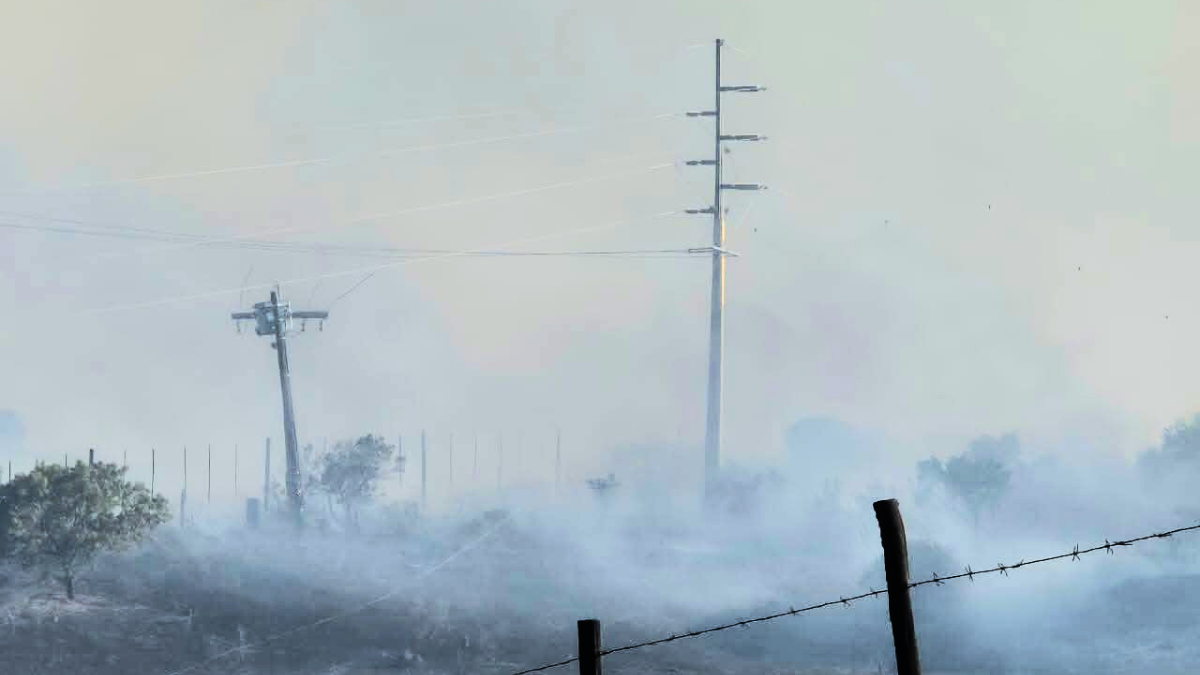
The fire has caused a major power outage across the Kouga, Humansdorp, and Sarah Baartman areas after four major Eskom power lines tripped, with some reportedly burned down by the advancing flames.
In the Kouga municipality, an urgent warning has been issued for residents of the Zwartenbosch area along the R330 road to vacate their homes immediately as the blaze continued its rampage through bush and farm areas.
The devastation has also impacted major transport routes; the N2 between Jeffrey’s Bay and Humansdorp, along with several internal roads in Jeffrey’s Bay, has been closed to traffic to ensure public safety and allow emergency teams to operate.
Speaking to the SABC early on 9 January 2026, Mayor Hattingh Bornman of the Kouga Municipality identified three primary areas of concern during a status update.
He noted that near St Francis Bay, teams worked throughout the night to protect property against continuous flare-ups.
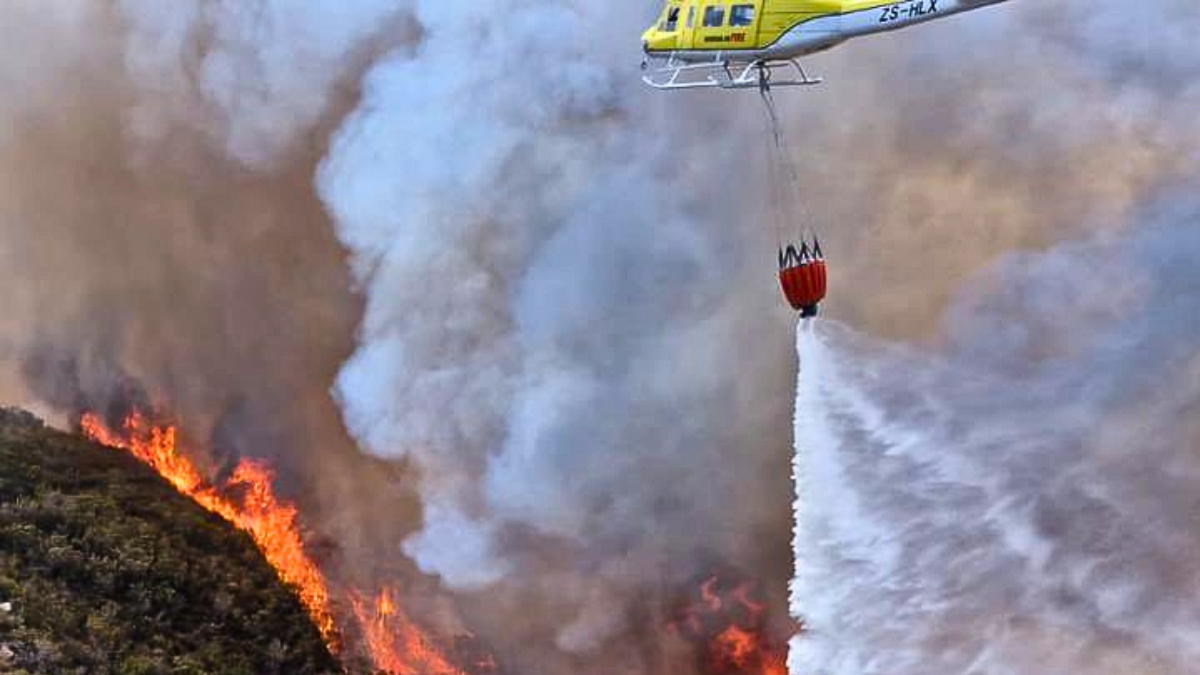
“At 5:30 this morning we were lucky to have the helicopter back in the air again,” Bornman stated, highlighting that the aerial support is “making a big difference.”
However, the situation remains dire near Jeffrey’s Bay, where Bornman confirmed that “four houses have burnt through the night” as the fire spreads rapidly in a northern direction.
Infrastructure and power struggles
The mayor noted that one of the most significant challenges facing the Kouga region is the restoration of electricity.
St Francis Bay has been particularly hard hit, with high-voltage Eskom lines having fallen.
Bornman emphasised the difficulty of the repair work, noting that Eskom crews can only begin assessments once the areas are declared safe.
“St Francis has been without power since yesterday afternoon and it will remain unfortunately off for quite some time… it’s high voltage lines so it’s a lot of work that needs to go into fixing those”.
While the municipality has utilised generators to keep water and sewage services running, the loss of main power lines continues to threaten the stability of local services.
Since then, Eskom said that it has restored electricity supply to most customers that were left without electricity in the Kouga, Humansdorp and Sarah Baartman and surrounding areas in the Eastern Cape.
Firefighters have also been working “extremely hard” to protect the main substation feeding Jeffrey’s Bay to prevent further widespread outages.
Fires in Mossel Bay
Simultaneously, the Western Cape’s Mossel Bay municipality is facing its own crisis.
Several homes were destroyed earlier this week when fires swept through Aalwyndal, Sonskynvallei, Hartenbos Heuwels and Renosterbos, with up to 95 fires deployed at its peak.
Joseph Johnston, the Senior Manager of Fire Rescue and Disaster Management Services for Mossel Bay, explained that while the fire was initially contained on Monday, a shift in weather conditions on Tuesday led to an uncontrollable spread.
Around 100 people were evacuated when the uncontrollable spread reoccurred.
Johnston told the SABC that a blaze moved through a ravine and up an embankment, propelling flames into residential neighbourhoods.
He pointed to a combination of factors that made containment nearly impossible: “the high heat, the wind, the long drought period and the thicket… the vegetation itself contributed to runaway fires”.
Johnston offered a sobering perspective on the power of nature, noting that even with adequate personnel, extreme wind speeds make traditional firefighting methods ineffective.
“You can have all the resources in the world but you will not stop it at these wind speeds and the way that this fire is propagated,” Johnston remarked, comparing the local situation to the massive wildfire struggles seen in California.
Official advice
Despite the destruction, the officials said that the local community has shown remarkable resilience.
Bornman praised local businesses for their support, noting they have been “amazing” in donating food and resources for both displaced residents and exhausted firefighters.
As the battle against the flames continues, officials are urging the public to exercise caution and restraint.
Bornman requested that residents remain calm and avoid “disaster tourism,” which has led to congestion on narrow roads needed by water tankers and fire trucks.
“We ask residents to please stay away from the fires at this stage so that we can operate the way that we want to and should operate.”
For those in rural areas or at the interface of residential and wildland zones, Johnston recommended “fire load reductions” and the creation of green gardens with indigenous plants to reduce risk.
He also suggested that property owners maintain their own fire breaks and basic firefighting capabilities to help protect their homes during such volatile events.
This article has been updated with the most recent information from Eskom, sent at 11 am on 9 January.







 Loading ...