
Andy Mothibi went from a small town to filling one of South Africa’s most critical jobs



Advocate Jan Lekgoa ‘Andy’ Mothibi, has come a long way from his schooling days in the tiny town of Zeerust.
The current head of the Special Investigating Unit (SIU) has been appointed as South Africa’s new National Director of Public Prosecutions (NDPP), effective 1 February 2026.
President Cyril Ramaphosa announced Mothibi’s appointment late on 6 January 2026, who takes the mantle from retiring Advocate Shamila Batohi.
The position is critical in South Africa as it heads the National Prosecuting Authority (NPA), deciding on prosecutions independently to uphold the rule of law and combat serious corruption without fear or favour.
During the state capture era under former President Jacob Zuma, politically compliant NDPP appointments hollowed out the NPA.
Interference, underfunding, leadership instability and capacity erosion enabled widespread looting and impunity as exposed by the Zondo Commission.
Experts say that a strong, independent NDPP is essential for rebuilding institutional integrity, restoring public trust, and driving accountability for past and ongoing corruption.
Ramaphosa stated that, due to the importance of the position in the criminal justice system, he established an advisory panel for the selection of the NDPP, which conducted an open and transparent selection process.
The panel selected six candidates for interviews out of 32 applicants, and ultimately submitted its report to the President on 12 December 2025.
“In its report, the panel advised the President that none of the interviewed candidates were suitable for the role of NDPP,” said Ramaphosa.
In terms of section 179(1)(a) of the Constitution, read with section 10 of the NPA Act, the President decided to appoint Mothibi.
Leonard Lekgetho, the current COO of the SIU, has subsequently been appointed to the position Mothibi will leave vacant.
He has over 22 years of forensic investigations experience, including serving as the Forensic Investigator at the then Directorate of Special Operations, which was known as the Scorpions.
Who is Advocate Mothibi?
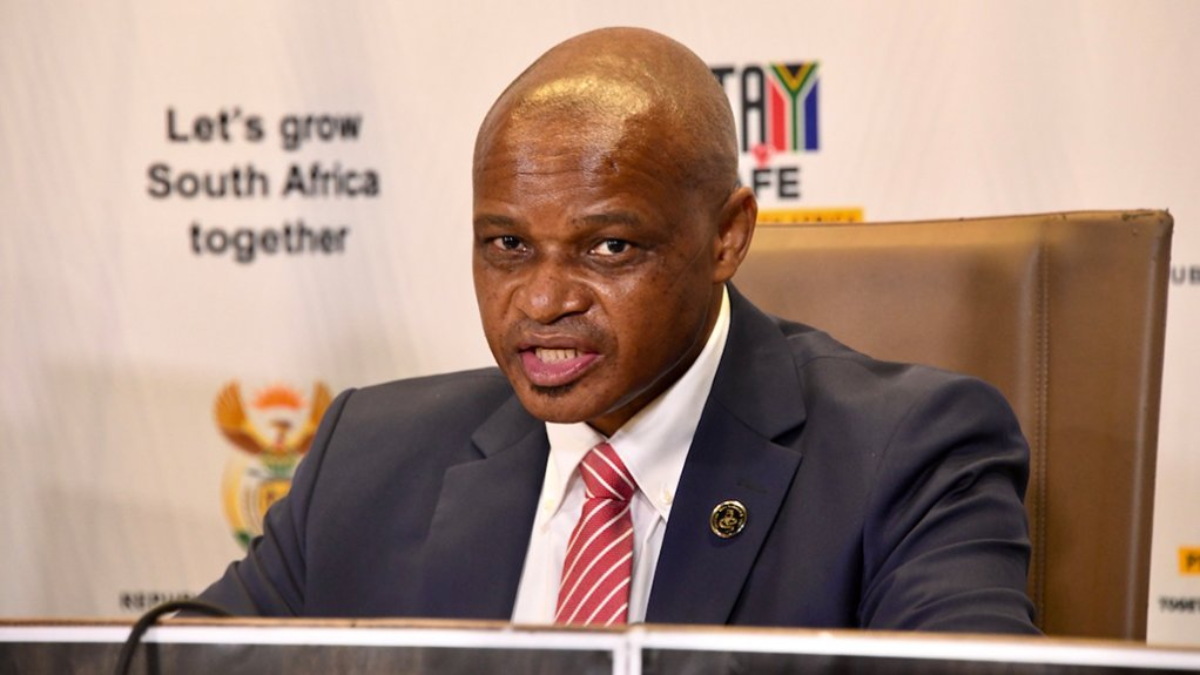
Mothibi was born near Hammanskraal, in what is now Gauteng province, formerly part of the Transvaal.
He completed his high school education in Zeerust, in the North West province, during the 1970s amid the height of anti-apartheid student activism.
For tertiary education, he earned a BProc law degree in 1987 from the University of the North West, formerly University of Bophuthatswana, in Mmabatho/Mafikeng.
He started his career as a Public Prosecutor in the Magistrates and Regional Courts in Johannesburg and the Soweto Magistrates Courts.
Mothibi also served on the bench as a Magistrate in the Johannesburg and Soweto Magistrates Courts.
He was then appointed to Head Employee Relations at the then Department of Finance in 1995 and was part of a Project that worked on the establishment of the South African Revenue Service (SARS).
At SARS, he served in the roles of the Head of Corporate Legal Services and the Head of Governance / Chief Governance Officer.
In 2005, he became Head of Compliance at South African Airways (SAA). After implementing SAA’s Enterprise and Compliance Risk Management Framework, he joined Nedbank in 2007 as Senior Manager of Enterprise Risk Management.
Within six months, he was promoted to General Manager of Group Operational Risk Management.
At Nedbank, he successfully led the implementation of the Basel II Operating Risk Framework, resulting in significant operational risk capital savings for the group.
In 2012, after implementing Basel II ORMF, he was appointed Head of Standard Bank Group Operational Risk Management.
The implementation involved assessing operational risks, including developing Anti-Fraud and Anti-Money Laundering scenarios, resulting in substantial Operational Risk Capital savings for the Group.
In October 2013, Mothibi was appointed Executive Director at Medscheme Holding, a subsidiary of AfroCentric Health, overseeing Group Legal Services, Governance, Risk, Compliance, Internal Audit, and the Medscheme Road Accident Fund Business Unit.
At AfroCentric Group, he led the implementation of the Enterprise Risk Management Framework and reorganised the Forensic Investigations Business Unit, enhancing forensic capabilities and recoveries.
Appointment as Head of the SIU
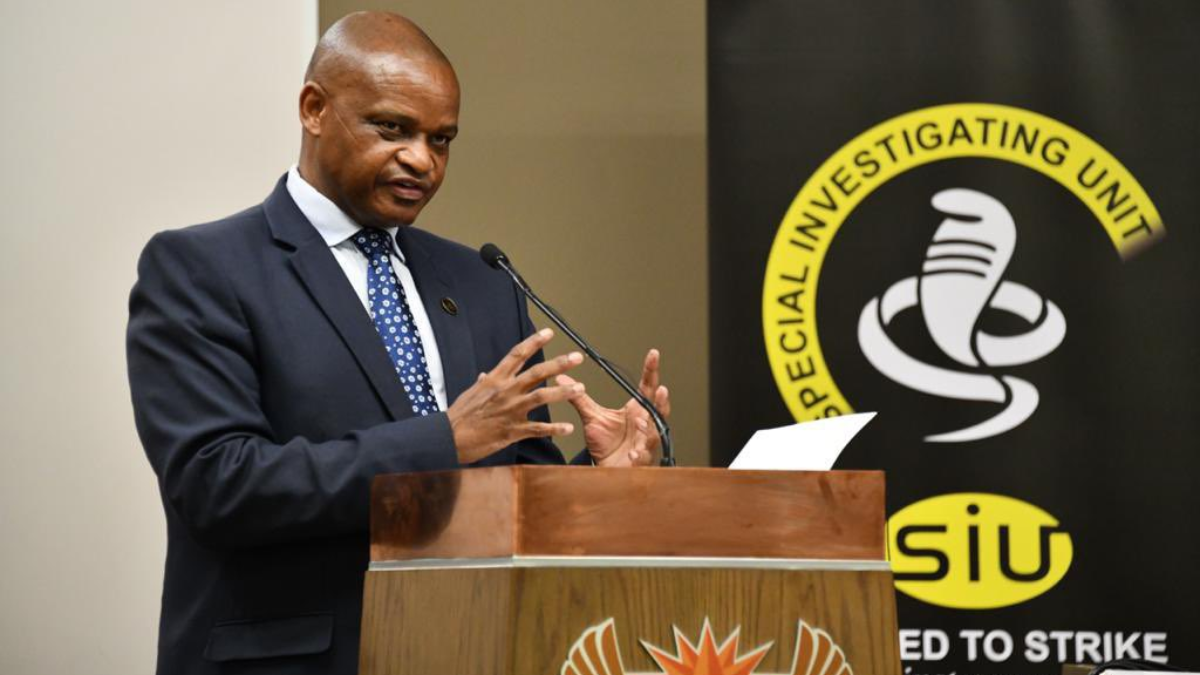
Mothibi was appointed as Head of the anti-corruption body, the SIU, by the President with effect from May 2016.
The task of the Head is to execute its mandate to investigate Maladministration, Malpractice, and Corruption within State Institutions and the Private Sector, as authorised by Proclamations issued by the President.
The ultimate goal is to recover money and assets lost by State Institutions and to refer perpetrators for prosecution and responsible officials for disciplinary action.
According to the SIU, to realise this mandate, he introduced and implemented an organisational turnaround strategy that internally put a premium on improved performance, effective processes, effective systems and people management.
The new strategy also focused on ethical leadership, clean governance and building strategic partnerships, said the SIU.
Proponents say that he transformed the agency into a highly effective anti-corruption body, achieving record financial impacts, including approximately R8 billion saved for the state in the 2023/24 financial year.
There was a reported R4 billion in recoveries and prevented losses in 2025.
His leadership drove major investigations into scandals at entities like Eskom, Transnet, PRASA, NSFAS, and Tembisa Hospital.
This resulted in billions in asset preservations, contract cancellations worth over R5.6 billion, prevented losses, referrals for prosecutions, and disciplinary actions.
Mothibi modernised operations through data analytics and the Special Tribunal, closed thousands of cases, and earned international recognition with his re-election as Vice President of the International Association of Anti-Corruption Authorities.
“He strives for a corruption-free South Africa, making a meaningful impact in the public sector, private sector and society,” said the SIU.
This is “by ensuring accountability and consequence management for wrongdoers in all tiers of government, inclusive of those private sector parties involved in the wrongdoing.”






 Loading ...
Thank you BEE and Transformation?