
Minister gazettes first BELA regulations for public comment



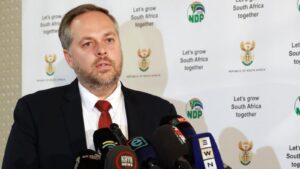
Minister of Basic Education Siviwe Gwarube has gazetted the first two sets of regulations under the Basic Education Laws Amendment Act, 2024 (BELA Act) for public comment.
The gazetted regulations relate to key provisions of the South African Schools Act regarding school capacity and school admissions.
“These regulations are instruments that will affect how schools are governed and managed, how children are admitted, and how our values as a society are reflected in our education system,” said Gwarube.
According to the DBE, these are designed to ensure that the amendments introduced by the BELA Act, which has been law and fully implementable since 24 December 2024, are implemented in a manner that:
- Upholds learners’ rights;
- Enhances school functionality; and
- Maintains the balance of powers and functions between School Governing Bodies and government.
The BELA Act in South Africa, signed into law by President Cyril Ramaphosa on September 13, 2024, has sparked heated debate, with certain provisions facing strong opposition from groups like Solidarity, AfriForum, the DA, and VF Plus.
The DA’s opposition centers on several contentious provisions of the BELA Act, which amends the South African Schools Act of 1996 and the Employment of Educators Act of 1998.
While numerous provisions have been welcomed, like criminalising not sending children to school, the BELA Bill has had its fair share of criticism, particularly clauses 4 and 5.
Clause 4 expands the education department’s control over school admissions, even without proper documentation, while Clause 5 requires school governing bodies to submit language policies for provincial approval, considering local demographics.
Proponents argue this promotes inclusivity by allowing more children who were unable to get admission to a school based on language policies, but opponents claim it centralises decision-making, weakens school autonomy, and potentially ‘marginalises’ Afrikaans-speaking schools.
The BELA Act commenced in December 2024 and has been applicable law since that date. As soon as regulations are finalised, legally vetted, and approved, they will be released for public comment.
“This modular release approach has been adopted to avoid the delays that a bulk publication would otherwise have caused,” said the DBE.
However, the modular release approach of implementing the BELA Act is seen to be a means that might address some concerns raised by critics.
Gazetted regulations

Looking at the Gazettes, the Admission of Learners to Public Schools Regulations, 2025, create a uniform national framework for all public schools, which:
- Establishes a national admissions framework to ensure fair, equal access to all public schools.
- The Head of Department (HOD) oversees admissions and has final authority, in consultation with governing bodies.
- School governing bodies may set admission policies, but these must be fair, rational, and consider learner interests, demographics, and school capacity.
- No learner may be denied admission due to discrimination or inability to pay fees.
- Learners cannot be excluded from any part of the school programme (academic, sport, culture) for financial or belief-based reasons.
- Admission documents include a birth certificate or sworn statement of age, proof of address, and immunisation record (exemptions allowed).
- All learners in South Africa, including undocumented and non-nationals, have a right to basic education and must be admitted.
- Schools must accommodate learners with special needs where practicable; otherwise, the HOD must arrange placement.
- The HOD may set feeder zones, giving priority to nearby learners or those with siblings at the school.
- Parents and governing bodies have a right to appeal admission decisions.
The Regulations on Minimum Uniform Norms and Standards for Capacity of Ordinary Public Schools establish a uniform framework to ‘maximise learning spaces’ and prevent overcrowding in public schools.
Proposed regulations include:
- Total school capacity is calculated by adding the capacities of all ordinary classrooms, excluding specialist rooms like labs or libraries.
- Factors considered include the curriculum, academic performance, classroom size and condition, health and safety standards, ablution access, staff numbers, and the need to avoid overcrowding.
- Learner-teacher ratios are capped at one teacher per 30 learners in Grade R, and one per 40 learners in Grades 1 to 12.
- Minimum classroom sizes are set: 60 m² for Grade R (accommodating 33 learners), and 48 m² for Grades 1–12 (accommodating 41 learners), based on space per learner and educator.
- All classrooms must be used efficiently to accommodate learners without overcrowding or underutilisation.
- Schools must complete a standard assessment form to calculate and report capacity, with sign-off by the principal, governing body, and provincial department.
The draft regulations are available on the Department of Basic Education’s website and in the Government Gazette No. 53119 and 53120 of 6 August 2025.
Public comment
Members of the public have 30 days from the date of publication (i.e. until 5 September 2025) to submit their written comments.
The DBE will be embarking on a national public awareness campaign to ensure that the content of the draft regulations is well understood and that all interested parties are empowered to make informed submissions.
For the first pieces of regulations gazetted, Gwarube said that the public comment process is an important opportunity for education stakeholders and the broader public to provide input.
“I call on all South Africans, including parents, teachers, school governing bodies, civil society, education experts and community members to participate meaningfully in this public comment process,” said Gwarube.
“Your voice matters. Let it be heard in shaping the policies and regulations that govern the education of your children.”







 Loading ...
The DA campaigned on their opposition to this, and now their minister is the one implementing it. What an absolute joke. No spin on this earth can make this less embarrassing for them.