
South African millionaire holiday hotspot facing a water crisis in peak tourist season



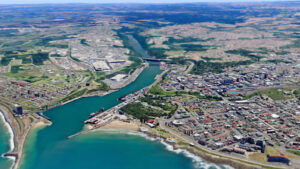
Despite having recently announced plans to curb an impending water crisis, Knysna has been forced to implement level 4 water restrictions during its busiest tourist season: the December holidays.
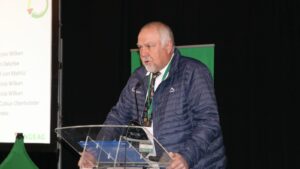
The Democratic Alliance’s Western Cape Provincial Whip in the National Council of Provinces, Rikus Badenhorst, says that the municipality is on the brink of a full-blown water, sanitation and refuse removal crisis.
Domestic water consumption has been limited to 6 kiloliters (kl) per household per month, or 200 litres per day.
For context, the South African Government notes that the international average daily water consumption is 173 litres per capita, or 5.2 kilolitres per month.
However, in South Africa, the average person uses 218 litres per day, or 6.5 kilolitres per month.
The restrictions also reduce business water consumption by 50%, based on a business’s average consumption during 2024.
The construction industry, car washes, and nurseries are required to find alternative sources of water.
A Stage 2 drought tariff has been enforced; the municipality says that a Stage 3 tariff has been triggered, but is keeping the tariff as low as possible.
The Knysna Municipality blames recent rainfall patterns, saline intrusion in critical water sources and limited reservoir storage capacity for the water restrictions.
“Recent rainfall patterns have been well below the long-term average, with August 2025 recording only 5mm at the Knysna Water Treatment Works, the lowest on record for that month,” the municipality said.
According to the South African Weather Service, rainfall in the Garden Route region is about 26% lower than average during this time of the year.
Drought and decaying infrastructure

“The river levels of all the rivers in the Greater Knysna area are low, and we expect an influx of people to the area during the upcoming holiday season. To ensure a continuous supply, we must use water sparingly,” Knysna municipality warned.
Badenhorst, on the other hand, blames the governing coalition. “50% of Knysna’s water is lost to leaks, including water bypassed by prepaird meters due to fraud,” he said.
The Knysna Municipality is run by an ANC-led coalition, including the Patriotic Alliance (PA), the Knysna Independent Movement, the Plaaslike Besorgde Inwoners, and the Economic Freedom Fighters (EFF).
“The coalition must take full responsibility. Instead of addressing infrastructure decay and massive revenue losses, this coalition has been consumed by infighting, late agendas, chaotic council meetings, and poor oversight of critical contracts,” said Badenhorst.
The water restrictions come weeks after the municipality was threatened with dissolution by the Western Cape government and placed under administration.
In September, Western Cape Local Government MEC Anton Bredell moved to dissolve the council and invoke Section 139(c) of the Constitution, citing severe governance failures and the urgent need to stabilize the municipality.
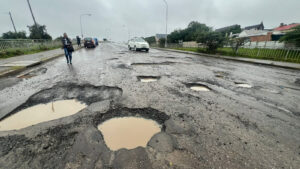
Residents and local business groups have long raised concerns about the municipality’s declining service delivery, citing raw sewage flowing into streets and waterways, inconsistent electricity supply, and slow responses to infrastructure failures.
The African National Congress (ANC) in the province, who control the council through a coalition, claimed that this “had political motives.”
A report tabled by the NCOP revealed that seven provinces voted in support of keeping the current council, while only two supported dissolution.
‘We cannot fix it alone’ – Knysna municipal government

By blocking the provincial intervention, the NCOP has also prevented the Western Cape from accessing additional funding that would have been permitted under a Section 139 Provincial Intervention.
This funding, Bredell argues, could have stabilised immediate operations and laid the groundwork for long-term governance improvements, creating a path toward comprehensive recovery.
While keeping the ANC-led coalition in place, the Select Committee on Cooperative Governance and Public Administration was concerned that “many stakeholders highlighted the issue of broken water pumps.”
The committee, therefore, gave the administration of Knysna 14 days to provide a clear plan to address its water and sanitation challenges.
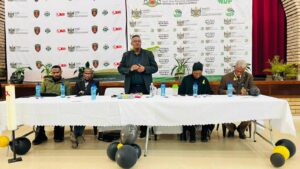
The administration updated the Knysna Water Contingency Plan, guided by the 2018 drought strategy, but a meeting was held by the government on 4 December to discuss the crisis.
It was attended by government, the National Department of Water and Sanitation, as well as experts, where the administration said that it cannot solve the water crisis alone.
“We are doing everything within our mandate to conserve water, repair infrastructure and plan new supply sources,” said Knysna Executive Mayor Thando Matika. “But the truth is that Greater Knysna cannot navigate this challenge alone.
“The reality is that our system is under strain, and our communities are feeling it.”
Article has been edited to correct international and South African average water consumption figures.


 Loading ...
I would like to know if there is just one municipality run by the ANC which is well managed?