
South Africa’s largest party fails to pay salaries on time



The African National Congress (ANC) has failed to pay salaries for those working at its head office, Luthuli House, for the third time this year.
This comes just a week before the ANC’s national general council is set to commence, and during the term of treasurer-general Gwen Ramokgopa, a period many believed would not be marred by financial difficulty.
In a letter addressed to employees dated 29 November, Luthuli House general manager Patrick Flusk warned that payments to staff for November would be delayed.
“The resultant default has not been in any way the fault of our employees. We guarantee that the employees will receive their salary and will be able to settle the obligation to you,” the letter read.
Staff in Luthuli House, who spoke to Sunday World, said that the money was still not reflecting as of the evening of 2 December.
However, this is not the first time that it has failed to pay its staff on time.
In October, Business Day reported that the party was unable to pay salaries following a court-ordered attachment of its bank accounts due to a debt exceeding R85 million.
The money was owed to Ezulweni Investments, a printing and marketing company based in KwaZulu-Natal, which had provided services to the party for election campaign materials in 2025.
The ANC also failed to pay the February salaries of those working at its headquarters, and, according to sources, politicians were not exempt, with secretary-general Fikile Mbalula among those awaiting remuneration.
However, they were not as fortunate as to receive any indication from the treasurer’s office about why they had not been paid and when they would.
“What is making the situation worse is that the treasurer-general has not said anything while disrupting the lives of so many people,” an insider told Sunday World.
Similar reports from The Sunday Times indicate that several ANC staffers have lost their homes and cars, as banks can no longer tolerate salary delays.
In 2021, it was reported that the ANC’s monthly salary bill for its roughly 1,600 delegates amounted to R18 million.
Newsday has contacted the ANC for comment, which will be added once received.
Disclosure rules deter donors — ANC

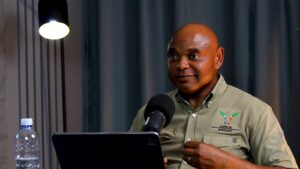
ANC Member of Parliament and chairperson of the Standing Committee on Finance, Joe Maswanganyi, has argued that the new Political Party Funding Act discourages donations.
In 2018, the Constitutional Court agreed, ruling that Parliament must create legislation to regulate and disclose party finances.
This judgment paved the way for the Political Party Funding Act, now the Political Funding Act, which came into effect in April 2021, introducing rules on disclosure, donation caps, funding oversight by the IEC, and, crucially, public access to this information.
Initially, the Act mandated that all private donations over R100,000 should be publicly disclosed, which was later increased to R200,000.
Because of this, Maswanganyi argued that donors were now deterred from donating, as their names would be associated with the party.
Parties also receive funding from the Independent Electoral Commission. However, the ANC MP has argued that they should be receiving more.
The ANC was the largest recipient of public funding in the 2023/24 financial year, receiving R1.19 billion from the public purse, which accounted for more than half of all public funds distributed.









 Loading ...
“ANC Member of Parliament and chairperson of the Standing Committee on Finance, Joe Maswanganyi, has argued that the new Political Party Funding Act discourages donations.”
Only from those who have something to hide, and it seems like the ANC have many of those.