
Court dismisses gag order on key South African investigative unit



The Western Cape High Court has rejected the urgent interdict sought by Integrated Convoy Protection (ICP) against Open Secrets.
ICP had attempted to block the publication of an investigative article detailing its contract to supply armoured vehicles to the United Arab Emirates (UAE).
An interim order issued had previously prohibited Open Secrets from commenting on the case or the gag order.
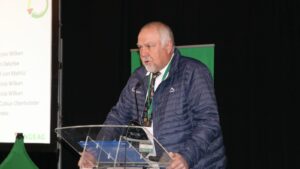
Speaking to Newsday at the time of the order, director of Open Secrets Hennie Van Vuuren explained that “organisations like Open Secrets work to expose the profiteers of economic crime, the people who also profit from human rights abuse.”
“It’s crucial that the work of organisations like Open Secrets, but other non-profit newsrooms and commercial media for that matter, is protected in our ability to present fact-based information.”
Given its extensive exposés, there have been attempts from the powerful and the wealthy to target an organisation with limited resources. However, this time was different.
“This is certainly… one of the first instances that it’s been as far reaching as it is in this instance, where I cannot even speak to you about who’s involved or which court the matter is being heard,” said Van Vuuren.
“We truly… have been gagged, yeah, we’ve been gagged.”
After significant backlash from civil society and other pressures, that restriction has now been lifted following legal proceedings with PowerLaw Africa.
In a statement published on 27 November, Open Secrets welcomed the ruling by Acting Deputy Judge President Erasmus.
The organisation said that it upholds the principles of journalistic freedom, public-interest reporting, and the role of a free media in exposing alleged wrongdoing.
They said that attempts to silence public-interest journalism threaten everyone’s right to information.
“We trust that this victory sends an important signal to those seeking to conceal their impropriety,” said Open Secrets.
“Our courts will not undermine the democratic principles of transparency and accountability for the sake of commercial and reputational interests, especially where that interest is premised on potentially unlawful conduct.”
The published investigation

Written by Open Secrets Head of Investigations Michael Marchant, the report has uncovered how the United Arab Emirates is selling well-equipped armoured vehicles to African states under a ‘Made in Emirates’ label.
However, these are South African-designed vehicles built by the staff of Integrated Convoy Protection, a South African company.
The vehicles were manufactured in the UAE by ICP staff using components exported from South Africa. It is disputed whether all required legal approvals for these exports were obtained, and police are currently investigating the matter.
This occurs amid the broader context of the UAE backing warring factions in countries like Sudan, where ongoing genocide affects the local population.
The full report by Open Secrets, titled Fake it ’till you make it: How an SA arms company built UAE armoured vehicles, is available here.




 Loading ...
ICP definitely shot itself in the foot here by trying to gag Open Secrets. Most people probably wouldn’t have come across the report or the investigation, but now it’s in the spotlight.