
SAHRC finds government department guilty of racial bias against black applicants



The South African Human Rights Commission (SAHRC) has found that the Department of Water and Sanitation has failed to address racial and gender biases related to the leasing of properties on Hartbeespoort Dam.
The organisation’s North West Provincial Office released its findings of an investigation into alleged unfair discrimination and administrative failures in Hartbeespoort.
The investigation was triggered after complaints were made by community members that the DWS had allocated state-owned land in a way that discriminated against black applicants.
The report found that since 2012, there were 120 applications, of which 78 were black. Only one was approved.
On the other hand, it found that two were approved for white applicants and another for a mixed-race entity.
According to the SAHRC, the DWS also unfairly revoked Permissions to Occupy (PTOs) without notice or giving affected individuals the right to be heard.
“By prioritising existing, mostly white occupants and revoking PTOs without fair process, DWS violated applicants’ rights to equality, dignity, and just administrative action,” said the SAHRC.
“Its failures reflect indirect racial and gender discrimination and contradict its constitutional duty to advance transformation.”
It argued that this discrimination contravened the Constitution and the Promotion of Equality and Prevention of Unfair Discrimination Act and amounted to a violation of the applicants’ human dignity.
Of the PTOs issued to men and cancelled, the investigation found that nine cases involved black people and one white. As for women, two cases involved white women and one black.
The DWS said in a statement that is studying the report and will provide a response in due course.
“However, it should be noted that the DWS has acted on some of the directives and there is an ongoing process to finalise the remaining ones,” it added.
“The process of addressing some of the directives is running parallel with a multi-stakeholder steering committee led by Deputy Minister of Water and Sanitation, David Mahlobo to look into different issues affecting the stakeholders operating their businesses on state-owned around Hartbeespoort Dam as well as residents around the water resource.”
In addition to unfair discrimination, the investigation also probed complaints about noise pollution and lack of enforcement of planning, building and environmental by-laws and regulations.
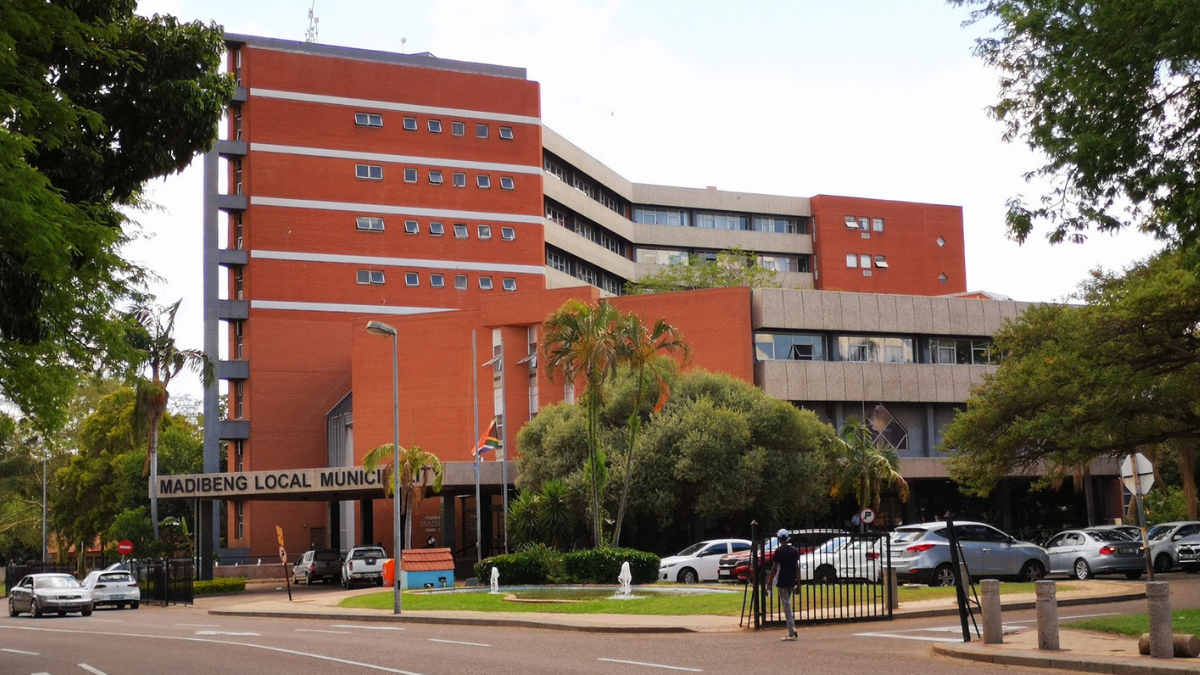
The SAHRC found that the Madibeng Local Municipality was at fault for failing to enforce by-laws regulating noise, planning and building controls, and failed to process planning and licensing applications timeously.
“These failures, though not racially motivated, exacerbated tensions, obstructed legitimate enterprises, and undermined transformation in Hartbeespoort,” it said.
There were also complaints of systemic racism made against the South African Police Service.
However, the SAHRC found these were not substantiated, given that police had attended to cases and continued to attend to cases lodged by black residents in Hartbeespoort.
The SAHRC’s directives
As a result, the SAHRC has directed the DWS to adopt its revised lease policy and develop a comprehensive transformation plan, which includes numerical transformation targets to address historical exclusion.
The DWS has also been directed to review all revoked PTO orders and reinstate them where appropriate, allowing affected persons to make representations.
The Madibeng Municipality must finalise and gazette outstanding by-laws on noise, environmental management and land use, and submit an enforcement strategy.
It has also been directed to submit a plan outlining how it intends to promote transformation within the Hartbeespoort Dam economy.
“All policies and plans developed in response to the directives must follow transparent, consultative processes with affected stakeholders.”
However, as things stand at the moment, these directives from the SAHRC are not legally binding, unlike those from the public protector’s office, a matter that is currently being debated in the Constitutional Court.
The matter arises from a 2018 case in which residents from a farm in Mpumalanga complained that the owner had cut off their water supply.
The SAHRC found that their rights were being infringed upon and ordered the owner to restore the supply, a directive that was ultimately ignored.
The Commission then took the matter to court, where it argued that not only should the directive be enforced, but all others should be legally binding too.
However, the opposition argues that doing so may weaken the Commission’s authority and take away the soft power that it uses to secure cooperation.
It also argues that if Parliament wanted the Commission to have binding power, it would have written it into law, as in the case of the Auditor-General.
This article has been edited to add the DWS’s comment following the release of the report.









 Loading ...
Nobody/organisation is more guilty of racial bias than the SAHRC.