
A lot of bark but little bite for ambitious climate pledges



As nations race toward the 2030 climate finish line, the promises they’ve filed with the United Nations look better than ever on paper, but the numbers still fall short of meeting targets.
The latest round of Nationally Determined Contributions (NDCs) under the Paris Agreement reveal clearer, more detailed pledges from governments across the world.
Yet, according to the UN Environment Programme (UNEP) and the United Nations Framework Convention on Climate Change (UNFCCC), current commitments still fall drastically short of what’s needed to keep global warming below 1.5°C in line with the Paris Agreement of 2015.
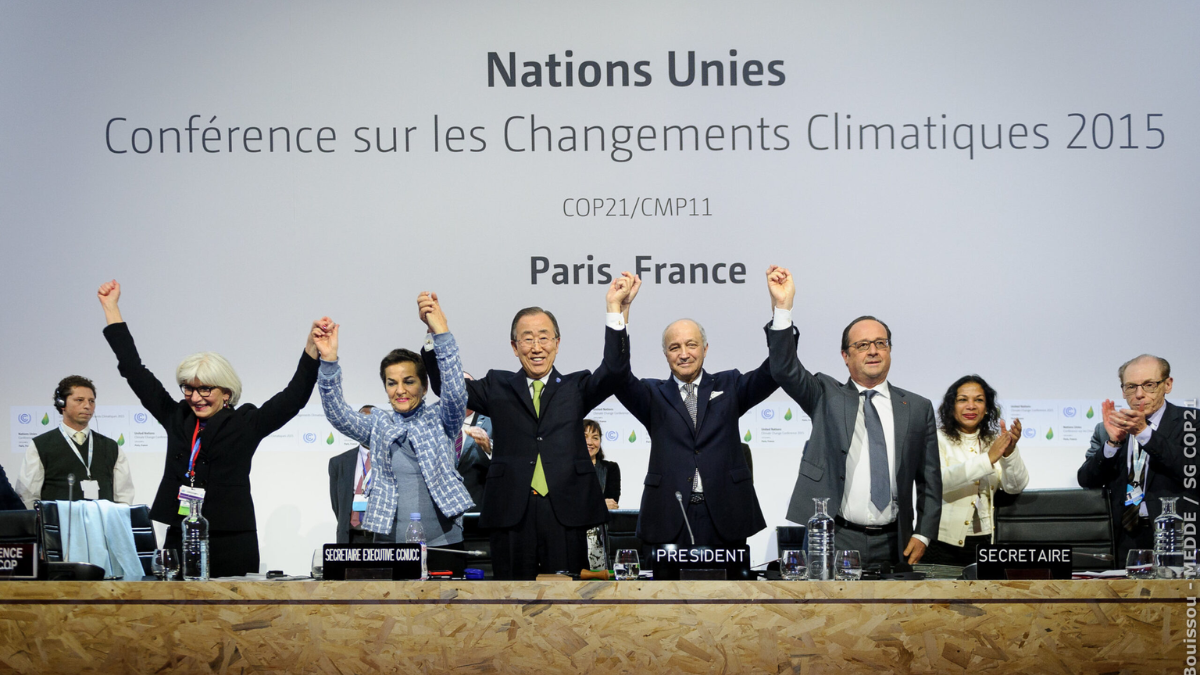
The Paris Agreement is a landmark international treaty adopted in 2015 by 195 countries to combat climate change.
Its central goal is to limit global warming to well below 2°C, “preferably” to 1.5°C, above pre-industrial levels (1850-1900) by significantly reducing greenhouse gas emissions.
The 2025 NDC Synthesis Report shows that while more countries are committing to economy-wide targets and cleaner energy transitions, collective ambition is insufficient.
Without accelerated policy implementation and deeper emission reductions, scientists warn the world could exceed key temperature thresholds within the next decade.
How major countries are committing to the transition
- China: Ambitious in words, Cautious in Action
China remains the world’s biggest emitter, accounting for nearly a third of global greenhouse gases. Its NDC commits to peak emissions before 2030 and achieve carbon neutrality by 2060. This pledge, while significant, is unlikely to place the world on track for the 1.5°C goal.
Despite massive investments in solar, wind and electric vehicles, China’s continued reliance on coal and heavy industry offsets these gains.
- India: Progress amid persistent poverty
India’s revised NDC promises to cut the emissions intensity of its GDP by 45% by 2030 compared to 2005 levels, and to generate half of its electricity from non-fossil sources.
These targets reflect genuine ambition, considering India’s developmental challenges and energy needs.
The country’s renewable energy rollout has been one of the fastest in the world, but its absolute emissions are still projected to grow. India’s full potential, experts note, hinges on international finance and technology transfers.
- European Union: The model multilateral bloc
The European Union remains one of the most ambitious actors in climate governance. Its legally binding target, at least a 55% reduction in emissions by 2030 compared to 1990, makes it a global benchmark.
The EU Emissions Trading System, combined with major green industrial policies, gives the bloc a credible pathway toward decarbonisation.
Still, the EU cannot close the global gap alone. Even if the bloc meets its targets, worldwide emissions will remain too high unless China, the U.S. and other large emitters match its pace.
- United States: The power and the pitfalls of politics
Few countries shape the climate agenda as much as the United States. Under President Joe Biden, the U.S. committed to cutting emissions by 50–52% below 2005 levels by 2030, supported by landmark legislation like the Inflation Reduction Act.
However, political uncertainty clouds these gains. President Donald Trump’s withdrawal from the Paris Agreement and all climate action, as well as ongoing Republican resistance to climate policy, have made the U.S. an unreliable partner.
America’s climate inaction could erase years of progress and weaken global morale. Even under favourable, different conditions to those of the Trump administration, the U.S. must implement its laws fully — and quickly — to stay on course for its 2030 goals.
- Russia: Targets too easy to miss the point
Russia’s NDC commits to cutting emissions by at least 30% below 1990 levels by 2030, a target most experts call weak and misleading.
Due to its economic decline in the 1990s, Russia already meets that goal with little additional effort.
Analysts say the pledge fails to push meaningful change in a country whose economy remains heavily tied to fossil fuels. Without stronger policies, Russia’s climate contribution will have little impact on global totals.
- Mexico: Ambition hinges on support
Mexico’s updated NDC aims to cut emissions by 35% unconditionally and 40% conditionally, provided it receives international finance and technology support.
The country has shown signs of commitment, yet policy inconsistency and dependence on oil revenues could undermine its targets.
If properly financed, Mexico could play a stronger regional role in decarbonisation, especially in Latin America’s growing renewable market.
- South Africa: A just transition under strain
South Africa’s NDC promises significant cuts within a defined emissions range. But the country’s reliance on coal, which still powers around 75% of its electricity, makes this a daunting challenge.
Power shortages, economic pressures and the need for a just transition that protects jobs have slowed implementation.
South Africa’s climate goals are achievable only with substantial international climate finance and decisive local reform.
In essence, South Africa’s climate ambition is real, but its grid and economy are not yet ready. The country is Africa’s biggest emitter, accounting for about 40% of the continent’s total emissions but only 1.2%, at most, of global emissions.
The global picture

Taken together, the NDCs of these key emitters still leave the planet far from the 1.5°C path. UNEP’s Emissions Gap Report shows that even if all current pledges are fully implemented, global emissions in 2030 would still be higher than the level required to meet the Paris Agreement target.
To change course, experts argue, three things must happen quickly:
- Stronger 2030 targets from the largest emitters.
- Massive new investment in renewable energy and low-carbon infrastructure, especially in developing countries.
- Political consistency — particularly from the U.S. — to maintain momentum and global trust.
Unless governments close the gap between ambition and action, the world will miss the deep emission cuts required by 2030. And as the UN warns, every year of delay makes the climb steeper, and the consequences costlier.
- Dr Enock Sithole is the executive director of the Institute for Climate Change Communication.










 Loading ...