
Parliament promises no more SOE bailouts



Over R521-billion of taxpayer injections later, the South African government will no longer bail out its State-owned Enterprises (SOEs).
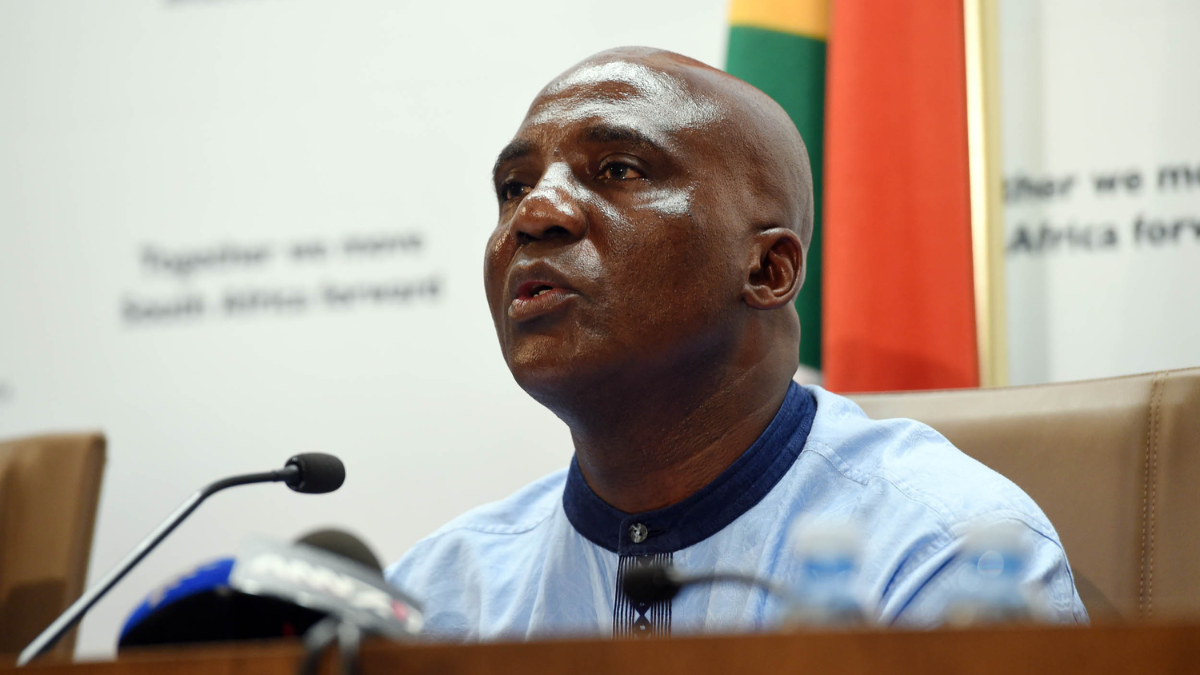
This is according to Joe Maswanganyi, the Chairperson of the Standing Committee on Finance, who spoke to Newzroom Afrika ahead of the Medium-term Budget Policy Statement.
“SOEs have been an albatross to our budget,” the chairperson said, which has been consistently echoed over the years by the ruling and opposition parties alike. Yet, more bailouts ultimately followed.
However, Maswanganyi said, with some SOEs ‘turning the corner recently’, Parliament feels comfortable in its decision to halt bailouts from the National Treasury.
“So, like PIC having registered a mark of R3 trillion in terms of its asset management, we see ACSA, which is responsible for civil aviation, having made a serious turn and showing positive results.”
The Public Investment Corporation (PIC) has recently come under scrutiny after United Democratic Movement Leader Bantu Holomisa wrote a letter to President Cyril Ramaphosa alleging looting and mismanagement within the SOE.
Holomisa said the situation was “of enormous proportions that rival the state capture scandal itself.”
Parliament said it is following up on the allegations that could threaten the stability of the SOEs portfolio.
The Airports Company South Africa (ACSA), on the other hand, achieved a record net profit of R1.1 billion for the last financial year.
The Chairperson added that some of South Africa’s biggest SOEs, and the biggest culprits for draining the budget, are showing improvement too.
“Amongst the biggest, Eskom is showing positive results as well, so we are quite hopeful,” he said.
“So that is the resolution of this parliament, that we will no longer bailout SOEs; there must be improvement in terms of governance.”
Earlier this year, Finance Minister Enoch Godongwana said that an estimated R521 billion in taxpayer money has been used for bailouts over the last 15 years.
Speaking at the launch of the Driving Inclusive Growth in South Africa World Bank Report, Godongwana said that this funding was made possible without significantly raising taxes.
Bailouts amount to R521 billion over last 15 years
This means the funding was taken from other areas of government, cutting expenditures which has ultimately hurt the economy.
This was cut from government services, including health, pension, provincial funding and the South African National Defence Force (SANDF).
The Foundation for Rights of Expression and Equality said that this money equates to R8,600 per South African citizen.
It could have built 8,600 new schools, 2.6 million homes, or a police force three times the size of the current one.
Due to inconsistent reporting and varying definitions of what constitutes a bailout, this number is likely higher than estimated.
According to a Standing Committee on Appropriations meeting, Eskom received R496 billion in bailouts since the 2008/2009 financial year.
Another top consumer of government bailouts is state-owned airline South African Airways (SAA). The entity has received R49 billion in just six years by 2023.
Despite the heavy bailouts, some SOEs still have not seen improvements due to financial mismanagement and corruption.
SAA is guilty of this, proclaiming a R352 million loss for the year ended March 2025.
When asked if the government is committed to no longer bailing the airline out of its financial crisis, Maswanganyi said the airline will not be receiving more government funding, and the Parliament committee expects to see improvements in its management.
“We raised the issue of SAA renting air buses from Qatar. We want SAA to buy its own fleet,” he said.
“We don’t want to be in a situation in airports where there’s a dominance of private airlines more than the national carrier, which is not the case when you go to Dubai, when you go to London.”
Professor William Gumede from the Wits School of Governance said that the main problem leading to SOE financial mismanagement and bailouts is incompetence and corruption.
“They don’t appoint capable companies; they appoint politically connected companies, who don’t deliver, so SOEs pay for services that don’t get delivered.”
Government bailouts by State Owned Entity:
| State owned entity | Government bailouts from 2013 to 2023 |
| Eskom | R181,550,000,000 |
| South African Airways | R48,400,000,000 |
| SANRAL | R23,736,000,000 |
| Sasria | R22,000,000,000 |
| Land Bank | R13,563,000,000 |
| SAPO | R10,392,000,000 |
| Denel | R8,994,000,000 |
| DBSA | R7,912,000,000 |
| Transnet | R5,837,000,000 |
| SA Express | R3,296,000,000 |
| SABC | R3,200,000,000 |
| ACSA | R2,325,000,000 |
| Total: | R331,206,000,000 |



 Loading ...
What about the Road Accident Fund ?
Almost every SOE is dysfunctional. Nice to say some are making a turnaround, but what caused the problem in the first place ? And no consequences for those that caused the problem…and no active follow up to recover the money…just expected that the taxpayers foot the bill for a “new” recovery plan with the same or similar uneducated, inexperienced and incompetent appointed management. I think BEE requirements must be excluded from top appointments…..rather have a competent leader instead of an incompetent leader. A competent leader will ensure that the team that supports him is properly trained, experienced and educated….and that can be sourced from a pool of eligible BEE candidates.