
McKenzie denied bid to divert sports federations’ funds for VAR



Sports, Arts, and Culture Minister Gayton McKenzie has confirmed that National Treasury denied his proposal to reallocate over R80 million of funding for sports federations to implement a Video Assistant Referee (VAR) system in South Africa.
Instead, he will only be allowed to use R20 million to fund the R82 million project and has admitted that VAR will be implemented a season later than initially promised.
This is according to a written reply to a question from DA Member of Parliament Leah Potgieter, who asked McKenzie what his rationale was for diverting the amount from sports federations to the VAR project.
“The Department submitted a request to shift R82 million; however, only R20 million was approved by the National Treasury,” McKenzie told Potgieter.
“The request to shift R62.7 million from sports federations was declined, and therefore the allocations to federations remain unchanged as approved by Parliament.”
He stated that the Treasury approved the transfer of R20 million to the South African Football Association (SAFA) following the cancellation of the Big Walk project.
When his department requested that the balance of R62.7 million be reallocated from sports federations to SAFA, McKenzie said this was “explicitly declined” on 31 October.
“Since the National Treasury did not approve the request to shift R62.7 million from sports federations’ allocations, there has been no diversion of funds affecting their operations or grassroots development programmes.”
“Treasury’s decision was made precisely to safeguard federations’ allocations and to avoid disruption to approved activities, particularly in relation to athlete development, talent identification, and Olympic readiness.”
This comes after McKenzie had promised the implementation of the system at the beginning of the 2025/26 season in a social media post in April.
“We are busy testing the different options this week, and we have gone to market for proposals. VAR will be part of the league next season,” the post said.
McKenzie has since admitted that he was mistaken and that the video referee will only be implemented from the 2026/27 season.
“When I thought VAR was going to be implemented, I, as the minister, thought that as soon as I bring the money, VAR would be there,” McKenzie said.
“I was then made aware that it doesn’t work like that. The process has changed. New rules govern VAR now. You, as a minister, can’t do it. You have to do it through SAFA and CAF.”
McKenzie added in his response that SAFA has appointed a VAR team, which has been working closely with FIFA and the International Football Association Board (IFAB).
He added that “the ministry is overseeing and controlling all initial project funding until the system is fully established and stable.”
VAR controversy
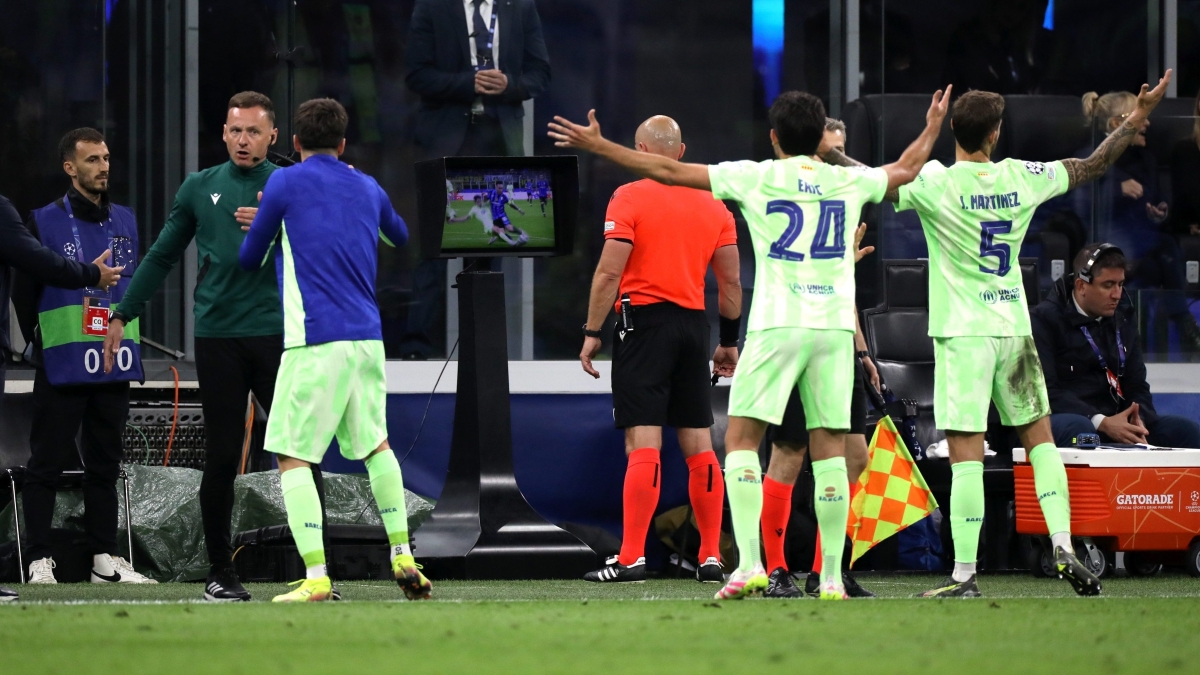
VAR is designed to maintain a higher standard of officiating matches and is used in the case of potential goal-scoring opportunities and red cards.
Data released by the Premier League shows that it has been able to improve the rate of correct refereeing decisions from 82% to 93%.
However, it has been a significant source of controversy in all leagues where it has been implemented.
For instance, one point of criticism is how it affects fans’ emotions when an on-field decision is changed following a review — a consideration when it was first tested by the IFAB in 2016.
“The initial testing will deliberately have a limited focus to minimise the impact on the flow and emotions which are crucial to football,” said IFAB technical director David Elleray.
It has also been criticised for disrupting the flow of the game when officials take several minutes to review a decision.
Testing began in leagues such as the Dutch Eredivisie and Australian A-League and was officially approved for use in 2018, just in time for the World Cup in Russia.
The technology was invoked 335 times in the group stage of the tournament, averaging seven times per match.
VAR was trialled in the English Premier League the following season, and clubs unanimously voted to implement it fully in the 2019/20 season.
“VAR is, and remains, a very effective tool in supporting the match officials on the pitch,” Premier League Chief Football Officer Tony Scholes told Sky Sports in 2024.
Despite this, a survey of 33,243 English and Welsh football fans revealed that nearly all participants found the sport to have become less enjoyable.
This included both those who experienced VAR in-stadium (95%) and those who watched it on television (94%).
Only 26% of respondents supported the use of VAR, while 97% supported the use of goal-line technology, which detects whether the entire ball has crossed the goal line.








 Loading ...
Gayton McKenzie is facing serious headwinds. The racism case, the allegations of nepotism, and now this.